
Designing a poolside deck, especially for above-ground pools, requires more than just good looks. Constant exposure to water, sun, and chemicals makes material selection critical. In California, where UV intensity and dry heat meet coastal moisture, choosing the right decking can make the difference between a long-lasting investment and ongoing maintenance headaches.
PVC and composite decking have become the top choices for wet-zone applications and for good reason.
What Makes Poolside Decking Different?
Unlike standard backyard decks, poolside environments face:
- Continuous moisture exposure
- Chlorine or saltwater contact
- Increased slip risk
- High UV and heat levels
- Barefoot traffic (comfort matters more)
Traditional wood struggles in these conditions, leading many homeowners to consider low-maintenance alternatives.
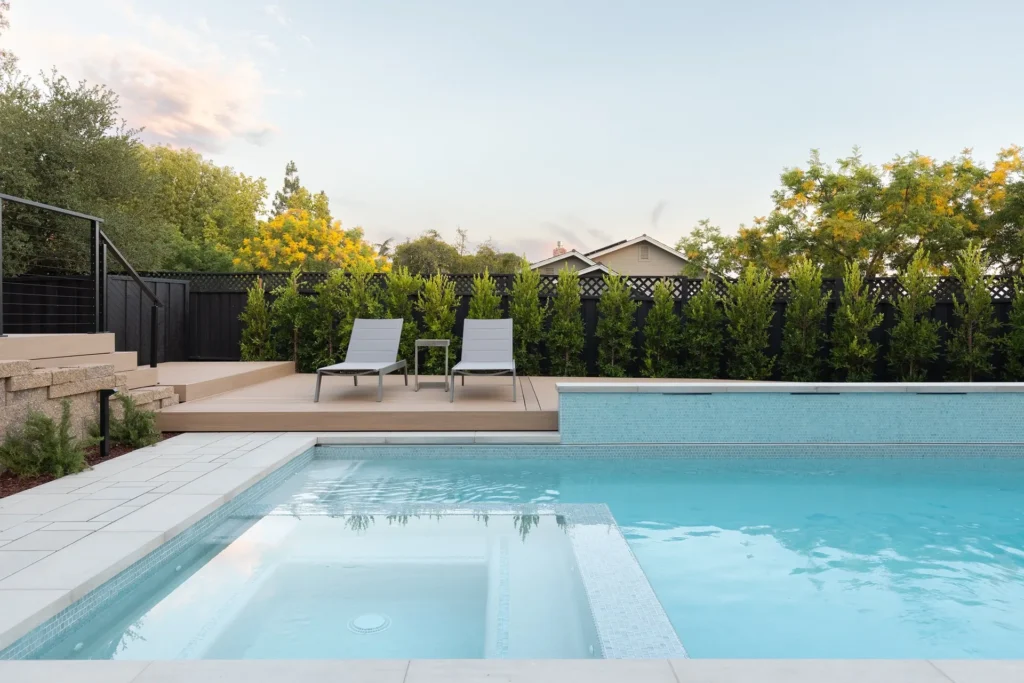
Why PVC Decking Performs So Well Around Pools
PVC decking is 100% synthetic, making it one of the most water-resistant materials available.
Superior Moisture Resistance
PVC doesn’t absorb water, which means:
- No swelling or rotting
- No mold or mildew penetration
- Ideal for splash zones and high-humidity areas
Fade & UV Resistance
California’s sun can be intense, especially in inland regions. PVC boards are engineered to resist:
- Fading
- Discoloration
- Surface breakdown
Comfortable & Smooth Surface
Most PVC decking features:
- Slip-resistant textures
- Smooth finishes for barefoot use
- No splinters
Consideration: Heat Retention
PVC can get hotter under direct sunlight. Lighter colors and proper airflow underneath can help mitigate this.
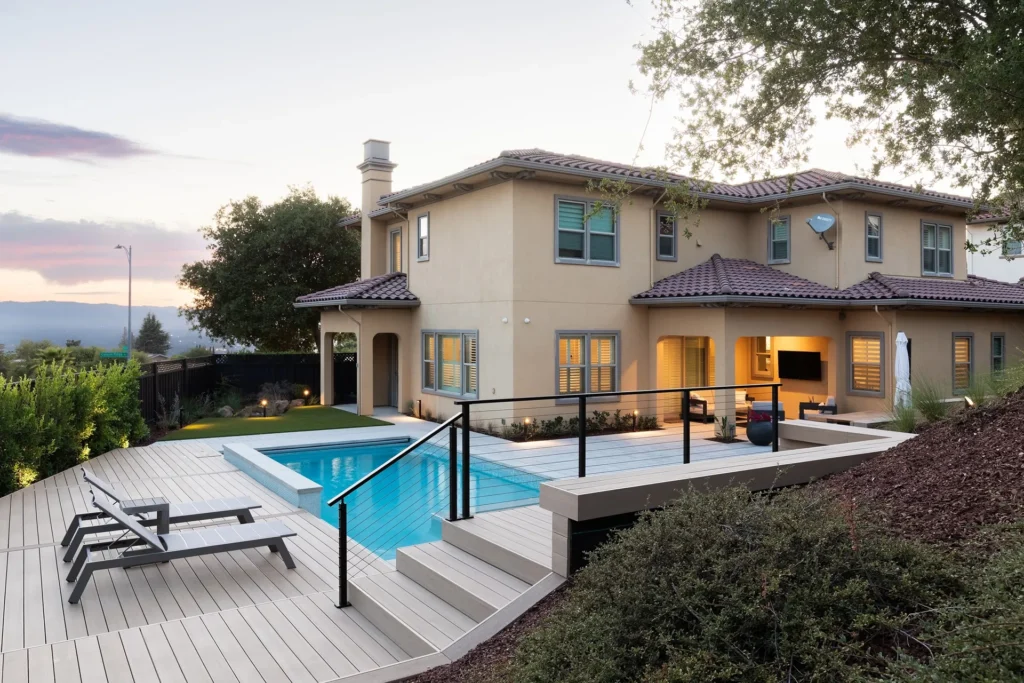
Why Composite Decking Is Also a Strong Option
Composite decking blends wood fibers with recycled plastics, offering a balance of durability and natural aesthetics.
More Natural Look
Composite tends to mimic real wood more closely, making it a popular choice for:
- High-end backyard designs
- Seamless indoor-outdoor transitions
Strong & Stable
Compared to PVC, composite is:
- More rigid
- Less prone to expansion and contraction
- Ideal for structural consistency in larger decks
Moisture Resistance (With Proper Installation)
While not fully waterproof, high-quality composite performs very well when:
- Proper spacing is maintained
- Ventilation is ensured
- Water drainage is planned
Consideration: Organic Content
Because it contains wood fibers, the composite can be more susceptible to:
- Surface mold (not structural damage)
- Moisture issues if improperly installed
PVC vs Composite for Poolside Decks
| Feature | PVC Decking | Composite Decking |
|---|---|---|
| Water Resistance | Excellent (fully waterproof) | Very good (not fully waterproof) |
| Heat Retention | Lower (lighter colors) | Moderate |
| Slip Resistance | High | High |
| Maintenance | Very low | Low |
| Appearance | More uniform/synthetic | More natural wood look |
| Expansion | Moderate | Lower |
California-Specific Considerations
Inland Heat (Sacramento, South Bay, etc.)
- PVC performs well but requires heat-conscious color selection (lighter colors)
- Composite may feel cooler underfoot
Coastal Areas (SF, Marin, Santa Cruz)
- Salt air + moisture → PVC excels
- Composite works well with proper ventilation
Above-Ground Pool Structures
- Elevated decks require good airflow → critical for both materials
- Hidden fasteners help prevent water intrusion and improve longevity
Fire Safety (WUI Zones)
- Always verify fire ratings for decking materials
- Many premium PVC and composite brands offer Class A or WUI-compliant options
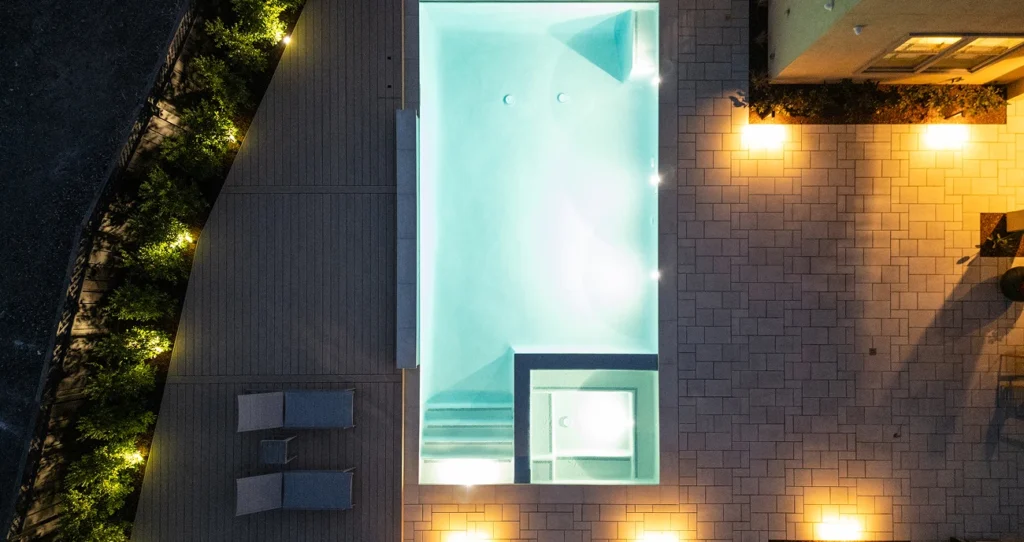
Best Practices for Poolside Deck Builds
- Choose light or medium tones to reduce surface heat
- Use hidden fastener systems for a cleaner, safer surface
- Ensure proper slope and drainage away from the pool
- Maintain adequate joist spacing (especially for composite)
- Add picture framing for a polished, high-end finish
- Consider pergolas or shade structures to improve comfort
For poolside decking in California, both PVC and composite offer clear advantages over traditional wood, but the right choice depends on your priorities.
- Choose PVC for maximum water resistance and minimal maintenance
- Choose composite for a more natural look with strong overall performance
Either way, thoughtful design and proper installation are what truly ensure your deck performs beautifully for years to come.
