
When planning a new deck in California, most homeowners focus on aesthetics and durability — but one critical factor often gets overlooked: weight and structural support. It’s important to understand the PVC vs composite decking weight and structural requirements for a safe deck. The material you choose, PVC or composite, directly impacts how your deck must be built underneath.
Understanding the Weight Difference
Composite decking is made from a blend of wood fibers and plastic, which makes it significantly heavier than PVC. On the other hand, PVC decking is 100% plastic, resulting in a lighter, more flexible material. When comparing these materials, keep in mind their respective weight and structural requirements; PVC vs composite decking create different engineering needs for your project.
That weight difference might not seem like a big deal at first, but structurally, it matters a lot.
- Composite = heavier load on your framing
- PVC = lighter load, easier to work with
Why Weight Impacts Structure
A heavier decking material like composite requires a stronger substructure to safely support the load over time. This includes:
- Larger or more closely spaced joists
- Reinforced beams
- More robust footings
If you’re replacing an old wood deck, your existing framing may not meet the requirements for composite, especially under California’s strict building codes and seismic considerations. For this reason, always compare PVC vs composite decking weight and structural requirements before starting repairs.
PVC, being lighter, typically allows for:
- More flexibility with existing framing
- Reduced structural strain
- Easier installations on elevated or rooftop decks
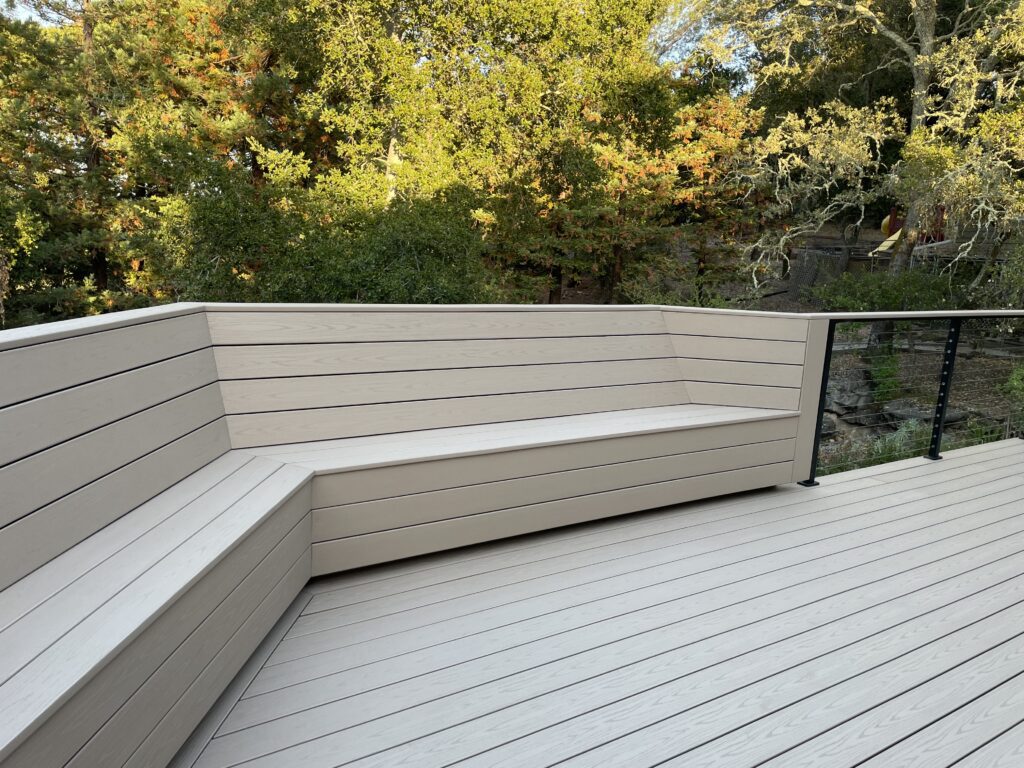
California-Specific Considerations
In California, structural planning isn’t just about weight — it’s also about safety and compliance. That’s why understanding the weight differences and structural requirements for composite versus PVC decking is especially important in seismic zones.
Between seismic activity, hillside builds, and strict permitting requirements, load calculations are taken seriously. PVC can sometimes streamline this process, especially in projects where weight limitations are a concern (like rooftop decks or older structures).
Long-Term Performance vs Structural Investment
While composite decking offers excellent durability and a more natural wood feel, it often comes with higher structural demands upfront. This is one reason to consider the decking weight and structural requirements of PVC versus composite carefully for your build.
PVC decking, while lighter and resistant to moisture, may require:
- More attention to expansion and contraction
- Proper fastening systems to maintain stability
So the decision isn’t just about the surface — it’s about what your structure can realistically support when comparing composite decking vs PVC, factoring in weight and structural requirements for each.
The Bottom Line
Choosing between PVC and composite decking isn’t just a design decision, it’s an engineering one. Be sure to weigh all the relevant factors including structural requirements and decking weight for each material.
If your project involves:
- Elevated decks
- Rooftop installations
- Deck replacements on older framing
…PVC might offer a smoother path. Ultimately, it comes down to PVC vs composite decking weight and the structural requirements for your unique site.
But if your structure is being built from scratch and designed to handle heavier loads, composite can be a solid long-term investment.
