
When planning a deck in the Bay Area, homeowners often compare PVC and composite decking. Both materials are designed to last longer and require less maintenance than traditional wood, but their long-term costs and performance can differ significantly.
Instead of focusing solely on the initial price, it’s important to consider the total cost of ownership over 10–30 years, including installation, maintenance, durability, and replacement risk.
Let’s break it down.
Understanding the Two Materials
PVC Decking
PVC decking is made entirely from synthetic plastic. It contains no wood fibers, making it highly resistant to moisture, mold, insects, and rot.
Because of this composition, PVC decks typically require very little maintenance, mostly occasional cleaning with soap and water.
Typical characteristics:
- Highest resistance to moisture and mold
- Lightweight and highly durable
- Premium material price
- 50 year warranty (TimberTech)
Composite Decking
Composite decking is made from a blend of recycled wood fibers and plastic polymers. It offers the look of wood while reducing many of the maintenance issues associated with traditional lumber.
Composite boards are also durable but can sometimes retain moisture or develop surface mold in shaded environments, especially with lower-quality products.
Typical characteristics:
- Natural wood-like appearance
- Lower upfront cost than PVC
- Moderate maintenance needs
- Typical lifespan of 25–30 years
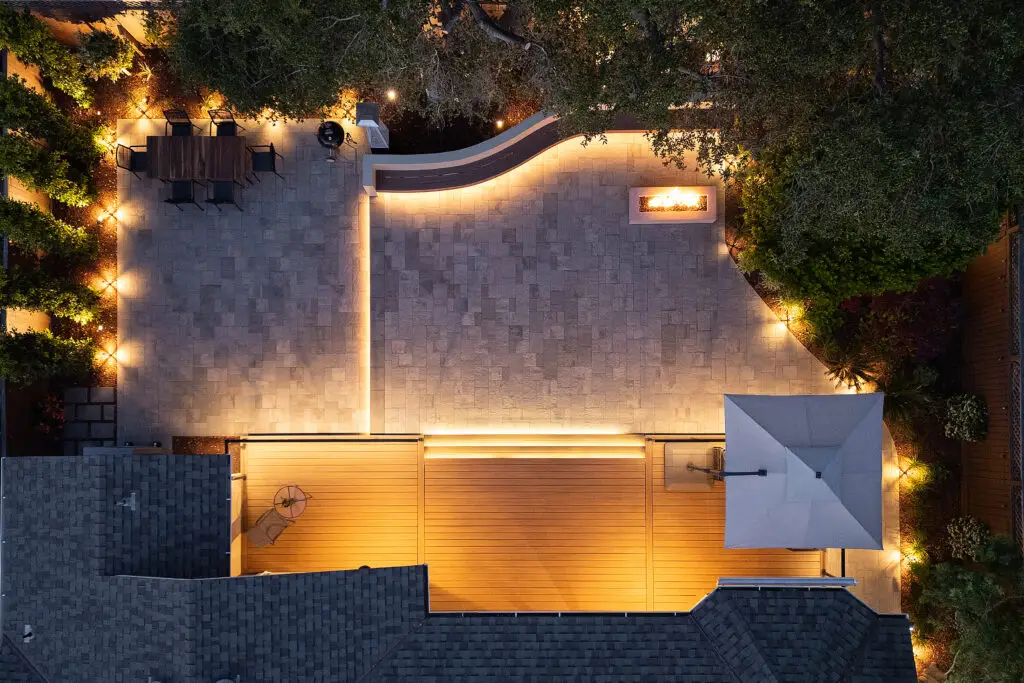
Maintenance Costs Over Time
One of the biggest long-term differences between these materials is maintenance.
PVC Deck Maintenance
PVC requires minimal upkeep:
- Occasional washing
- No staining or sealing
Composite Deck Maintenance
Composite decks require slightly more attention:
- Regular sweeping
- Periodic deck cleaner
- Possible mold removal in shaded areas
Over time, this difference can add up.
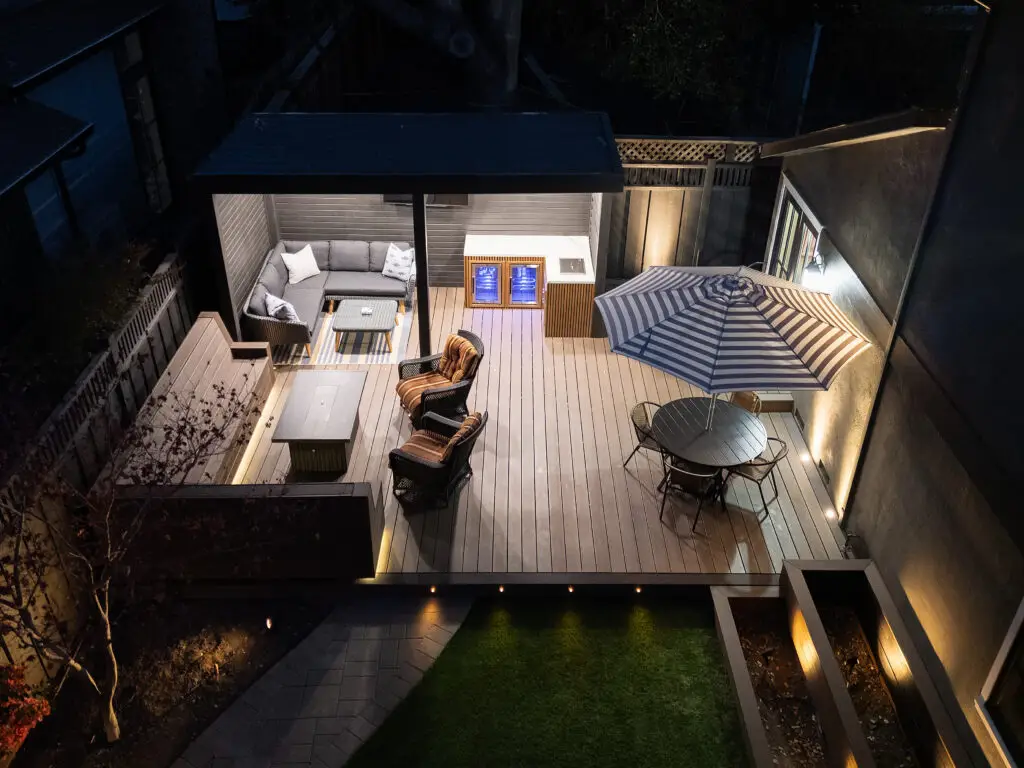
20–30 Year Cost Comparison
Over longer time horizons, durability starts to matter more.
| Timeframe | Composite | PVC |
|---|---|---|
| 25 years | May require board replacement or refinishing | Typically still performing well |
| 25–30 years | End of lifespan for many products | Still within service life |
Composite decks typically last 25–30 years, while PVC can last 50 years with minimal degradation.
This means a homeowner planning to stay long-term may avoid partial or full replacement costs with PVC.
Performance in the Bay Area Climate
The Bay Area climate includes:
- Coastal moisture
- Morning fog
- UV exposure
- Temperature swings
These factors affect decking differently.
Composite
- Can absorb small amounts of moisture
- May develop mildew in shaded environments
PVC
- Completely synthetic
- Highly resistant to water, rot, and insects
This is one reason many high-end projects in coastal regions favor PVC materials.
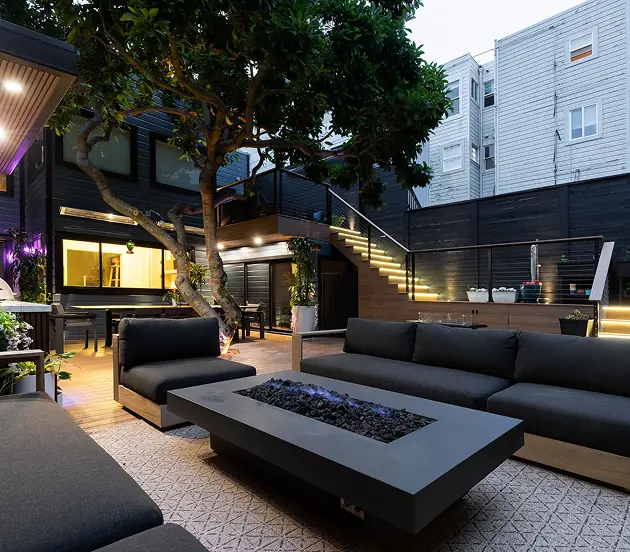
Resale Value and ROI
Deck additions can improve property value. Studies suggest homeowners may recover 65–75% of the investment when selling their home with composite or PVC decks.
Because of their durability and low maintenance, premium materials often appeal more strongly to buyers.
Which One Is More Cost-Effective?
Choose Composite If:
- You want a lower upfront investment
- You plan to move within 10–15 years
- Budget is the main factor
Choose PVC If:
- You want the lowest maintenance possible
- You plan to stay in the home long term
- Your deck is exposed to moisture or shade
Both composite and PVC decking are excellent options for Bay Area homeowners looking for durability and low maintenance.
Composite offers a more affordable entry point, while PVC provides maximum longevity and minimal upkeep.
For homeowners planning to enjoy their outdoor space for decades, PVC may deliver the best long-term value, even with its higher initial cost.
Pro tip: The most important factor in long-term deck value isn’t just the material—it’s professional design and installation. Proper drainage, framing, and ventilation can extend the life of any decking system.
