
An aging deck does not always need to be completely rebuilt. Sometimes, it’s important to ask whether you should replace or resurface your deck to give the space a fresh new look and extend its useful life. In other cases, resurfacing an old deck only covers up deeper structural problems.
So how do you know which option makes sense for your Bay Area home?
The answer depends on the condition of your existing decking, framing, stairs, railings, and overall structure. Before deciding, it is important to look beyond the surface and understand what is happening underneath.
What Is the Difference Between Resurfacing and Replacing a Deck?
The terms can sound similar, but they describe two very different projects.
Resurfacing an Existing Deck
Resurfacing generally means removing the existing decking boards and installing new boards over the existing structural framing.
This can be a practical option when:
- The framing is still structurally sound.
- The joists and beams are in good condition.
- There is no significant rot or deterioration.
- The existing layout still works for your home.
- The stairs and railings are in good condition or can be safely updated.
- The deck does not have underlying drainage or structural concerns.
In this situation, resurfacing can provide a significant visual upgrade without rebuilding every part of the deck.
Full Deck Replacement
A full deck replacement involves removing the existing deck and rebuilding the structure and surface as needed.
This may be the better approach when:
- The framing has significant rot or deterioration.
- Joists, beams, posts, or connections need replacement.
- The existing structure no longer meets current requirements.
- The deck has movement, sagging, or other structural concerns.
- The existing layout does not work well for your outdoor space.
- Stairs or railings need substantial reconstruction.
- You want to significantly expand or redesign the deck.
- You are considering major upgrades to the overall outdoor living area.
A full replacement also allows homeowners to rethink the entire design rather than simply replacing what is already there.

Why the Structure Matters More Than the Decking Boards
One of the biggest mistakes homeowners can make is looking only at the condition of the visible decking.
A deck can have boards that look old and weathered while the framing underneath remains in good condition. But the opposite can also happen: new-looking decking can sit on framing that has deteriorated over time.
The structural components underneath the surface can include:
- Joists
- Beams
- Posts
- Ledger connections
- Footings
- Blocking
- Stairs and stair framing
- Railing supports
If these components have significant deterioration, simply installing new decking boards may not address the underlying problem.
That is why a professional evaluation of the existing structure can be an important first step before deciding between resurfacing and replacement.
Signs Your Deck May Need More Than New Boards
Certain warning signs deserve closer attention.
1. Soft or Spongy Areas
If sections of your deck feel soft when you walk across them, there may be deterioration below the decking surface.
A few isolated problem boards can potentially be replaced. However, widespread softness may indicate a larger issue with the framing.
2. Rot Around Joists, Beams, or Posts
Rot is not limited to decking boards. Water exposure over many years can affect structural components as well.
If deterioration extends into the framing, resurfacing may not be enough.
3. Movement or Sagging
A deck should feel stable under normal use. Excessive movement, sagging, or noticeable changes in the deck’s level can indicate structural concerns that should be evaluated before new decking is installed.
4. Aging or Damaged Stairs
Stairs are an important part of the deck’s structure and everyday usability. If the stair framing is deteriorated or the existing design no longer works well, replacing only the deck boards may leave an important part of the project unresolved.
5. An Outdated Layout
Sometimes the structure is not the only reason to consider a full replacement.
Your existing deck may simply no longer fit the way you use your backyard.
For example, you may want to:
- Expand the deck.
- Create a larger entertaining area.
- Change the location or configuration of the stairs.
- Add privacy screening.
- Incorporate lighting.
- Add built-in seating.
- Improve access between the home and backyard.
- Create a more cohesive outdoor living space.
If the goal is to significantly change the design, rebuilding can provide much more flexibility than resurfacing.
What About Older Redwood Decks in the Bay Area?
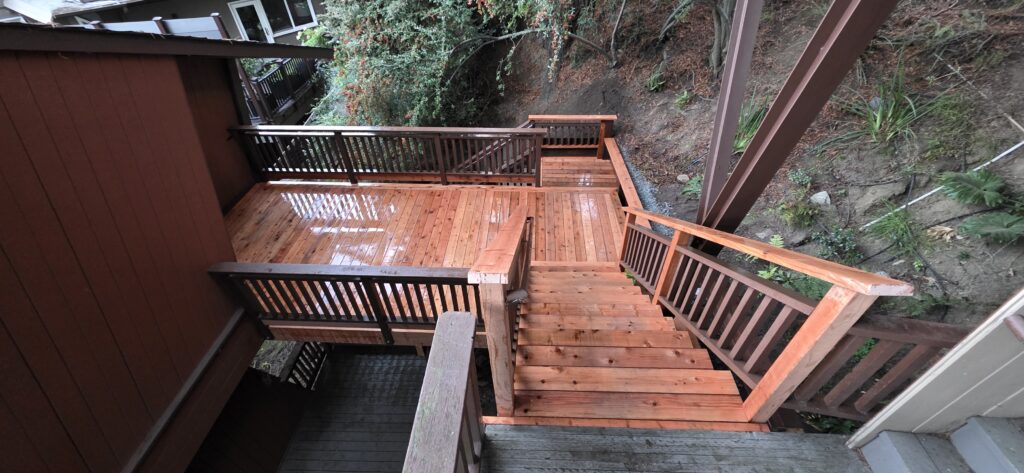
Redwood has been a popular decking material throughout the Bay Area for decades, and many homes still have older redwood decks.
Over time, however, exposure to moisture, weather, foot traffic, and normal aging can take its toll.
Some older redwood decks may have surface boards that have deteriorated while portions of the underlying framing remain usable. Others may have more extensive deterioration that requires a complete structural rebuild.
The important point is that the age of the decking alone does not determine whether the deck should be resurfaced or replaced.
The condition of the entire system matters.
Consider the Opportunity to Upgrade Your Materials
If you are already investing in your deck, it may be worth considering whether the existing material still fits your priorities.
Modern decking options can offer different combinations of:
- Low maintenance
- Durability
- Color stability
- Scratch resistance
- Fire-related performance characteristics
- Long-term warranties
- Wood-like appearance
At Techwood Decks, we frequently work with TimberTech decking products and can help homeowners compare different options based on the design, location, and goals of their project.
The right material is not simply about choosing a color. It should also work with the home’s architecture, the surrounding landscape, and how the deck will be used.

Bay Area Homes Can Present Additional Considerations
Every deck project has its own conditions.
A deck on a relatively level lot may involve very different considerations from a deck built on a hillside. Some Bay Area properties have significant slopes, difficult access, drainage concerns, mature trees, or other site conditions that can affect the design and construction process.
Fire-related requirements and local building regulations can also be important considerations depending on the property’s location and project scope.
For larger or more complex projects, the design and permitting process may involve architectural and engineering professionals.
This is another reason why an early evaluation can be valuable. It allows you to consider potential site conditions and project requirements before construction begins.
Can You Change the Size of Your Existing Deck?
One advantage of a full replacement is the ability to rethink the footprint.
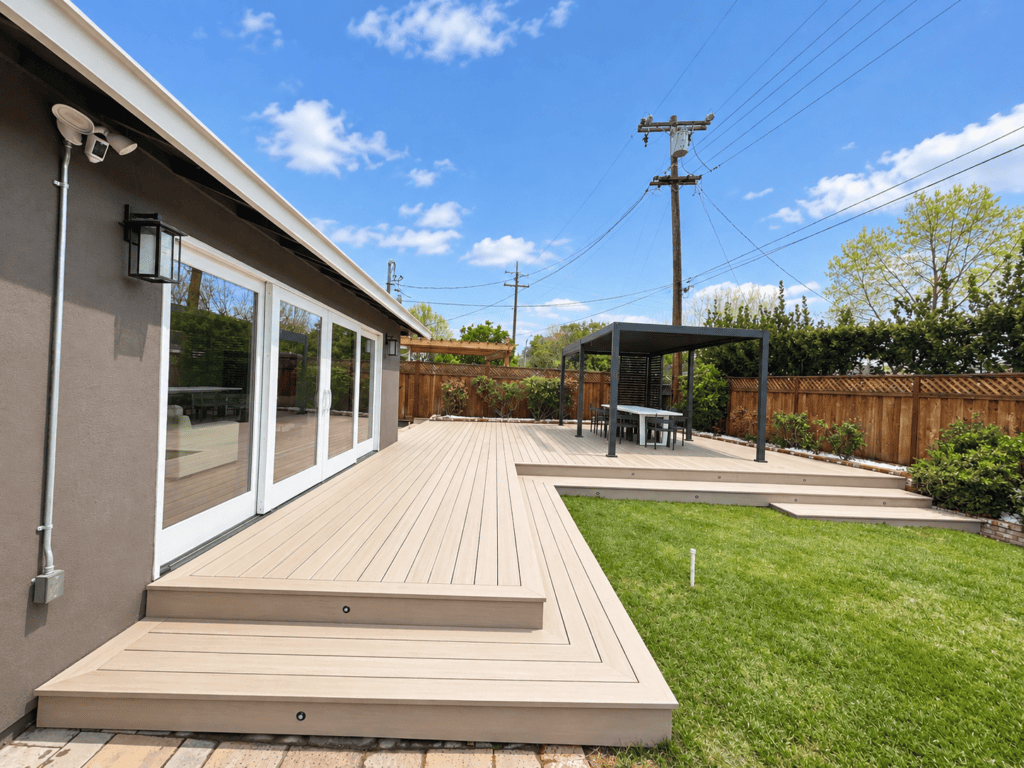
If your existing deck feels too small, a replacement may let you create a larger outdoor living area.
For example, you might want enough space for:
- A dining table
- Outdoor furniture
- A grill
- Built-in seating
- Entertaining guests
- A designated lounge area
However, expanding a deck is more than simply adding a few extra boards. Changes to the footprint can affect the structure, stairs, railings, drainage, setbacks, permitting, and overall design.
A professional evaluation can help determine what is realistically possible on your property.
Questions to Ask Before Choosing Resurfacing
Before deciding to replace only the decking boards, ask:
Is the existing framing structurally sound?
Are the joists, beams, posts, and connections in good condition?
Do the existing stairs still work for the space?
Are the railings safe and in good condition?
Do I like the current deck size and layout?
Will I want to expand or redesign the deck in the next few years?
Are there drainage, access, slope, or other site concerns?
If the answer to several of these questions raises concerns, it may be worth looking at a complete replacement rather than treating the project as a simple resurfacing.
A Professional Evaluation Can Help You Decide
You do not necessarily have to decide between resurfacing and replacement before talking with a professional.
A site evaluation can help identify the condition of the existing structure and determine what parts of the deck may be reusable.
From there, you can compare different approaches and understand what each option means for the project’s design, materials, timeline, and overall investment.
At Techwood Decks, we specialize in high-quality full deck replacements and new deck construction throughout the Bay Area. Our team can evaluate the existing setup, discuss your goals, review material options, and help determine the appropriate direction for your project.

Replace or Resurface? Start With the Structure.
The biggest takeaway is simple: do not make the decision based only on what the deck boards look like.
If the structure underneath is in good condition and you are happy with the existing design, resurfacing may be a practical way to give your deck a new life.
If the framing has significant deterioration, the layout no longer works, or you want to create a substantially different outdoor living space, a full replacement may provide a better foundation for the project.
The best place to start is with an evaluation of the existing deck and a clear understanding of what you want your outdoor space to become.
Ready to Talk About Your Bay Area Deck Project?
If you are considering replacing or resurfacing your existing deck, Techwood Decks would be happy to learn more about your project.
Share a few photos, your property location, and some information about what you would like to change. Our team can help you understand the next steps and determine whether your project may be a good fit for a new deck or full deck replacement.
Learn more about Techwood Decks or explore our completed deck projects to see examples of our work.
