
When it comes to building a premium deck in California, clean lines and long-term durability are just as important as material selection. Hidden-fastener systems and thoughtful edge detailing play a critical role in both aesthetics and performance, especially when working with PVC and composite decking.
In this guide, we’ll break down the best practices for each material, so your deck not only looks seamless but also stands up to California’s diverse climate conditions.
Why Hidden Fasteners Matter
Hidden fasteners are more than just a visual upgrade. They’re a structural and maintenance advantage.
Key benefits include:
- Smooth, barefoot-friendly surfaces
- Reduced moisture intrusion compared to face screws
- Cleaner, high-end appearance
- Easier board replacement (with the right system)
For homeowners across coastal, inland, and hillside regions, these systems also help minimize long-term wear caused by expansion, contraction, and humidity changes.
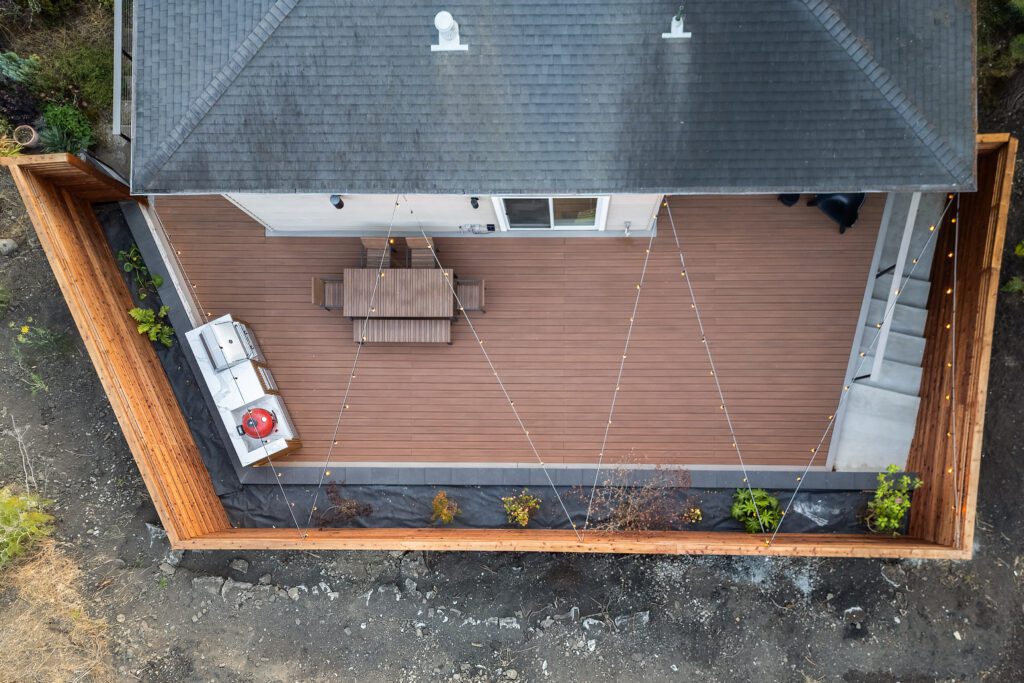
PVC Decking: Best Practices
PVC decking is a fully synthetic material, meaning it behaves differently than wood-based composites, especially in California heat.
1. Choose Manufacturer-Specific Fasteners
PVC boards are engineered to work with proprietary clip systems. Using the recommended fasteners ensures:
- Proper spacing for expansion
- Secure hold without over-restriction
- Warranty compliance
2. Allow for Expansion & Contraction
PVC expands more than composite, particularly in hot inland areas like the South Bay or Central Valley.
Best practices:
- Follow temperature-based gapping guidelines
- Avoid tight butt joints
- Use breaker boards on longer runs
3. Edge Details: Picture Framing is Key
PVC edges can look less natural when exposed.
Solutions:
- Add a picture frame border for a polished perimeter
- Use matching fascia boards to conceal the substructure
- Consider heat-bending techniques for curved edges (advanced builds)
4. Avoid Over-Fastening
PVC is softer than composite. Over-tightening clips can:
- Restrict natural movement
- Cause warping or buckling over time
Composite Decking: Best Practices
Composite decking contains wood fibers, which makes it more rigid but also more sensitive to moisture if not properly installed.
1. Use Grooved Boards with Clip Systems
Most composite boards are designed for hidden fasteners via side grooves.
Benefits:
- Consistent spacing
- Faster installation
- Strong lateral hold
2. Mind Moisture & Ventilation
California’s coastal regions (such as Santa Cruz or Marin) have higher humidity.
Important considerations:
- Ensure proper joist spacing
- Allow airflow beneath the deck
- Avoid trapping water at board edges
3. Clean Edge Detailing Options
Composite tends to have a more natural wood-like look, but edges still need attention.
Popular approaches:
- Picture framing for contrast and structure
- End caps or fascia boards to hide cut ends
- Mitered corners for high-end finishes
4. Breaker Boards for Large Decks
On wider decks, breaker boards help:
- Reduce visual repetition
- Manage board length limitations
- Improve structural layout
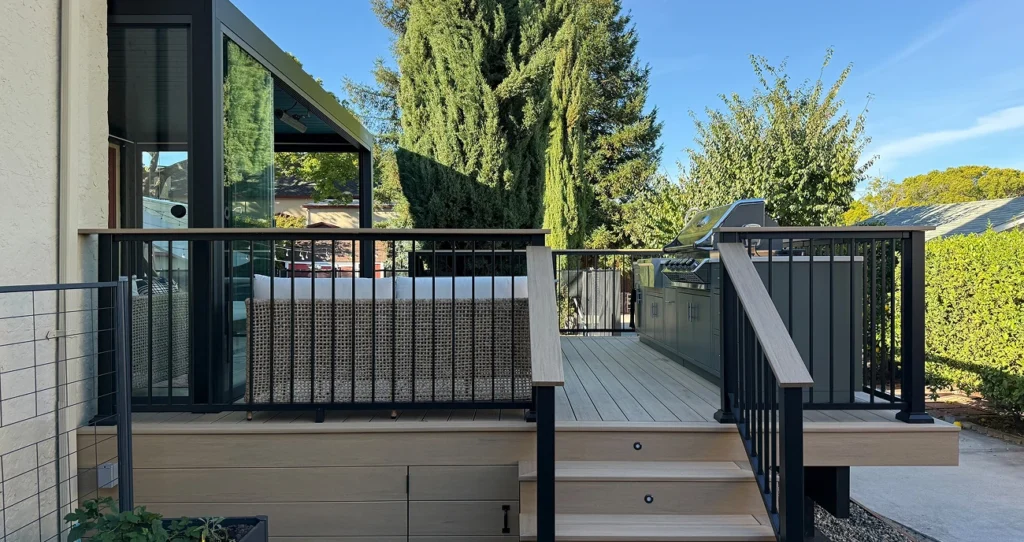
PVC vs Composite: Key Differences in Fastening & Edging
| Feature | PVC Decking | Composite Decking |
|---|---|---|
| Expansion | Higher | Moderate |
| Fastener Type | Proprietary clips | Universal + brand-specific |
| Edge Appearance | More synthetic | More wood-like |
| Heat Sensitivity | Lower (lighter colors) | Moderate |
| Flexibility | More flexible | More rigid |
California-Specific Considerations
Building decks in California means designing for a wide range of environmental factors:
Sun Exposure
High UV and heat (especially inland) increase expansion, and PVC requires extra attention to spacing (12″ on center).
Coastal Moisture
Salt air and humidity demand corrosion-resistant fasteners and proper ventilation, especially for composite.
Sloped & Hillside Lots
Hidden fasteners help maintain alignment and reduce visible stress points on elevated structures.
Fire Zones
In wildfire-prone areas, always verify that your decking and fastening systems meet local fire code requirements (WUI compliance).
Pro Tips from the Field
- Always install with manufacturer-approved systems. Mixing brands can lead to failure
- Pre-plan board layout to avoid awkward edge cuts
- Use contrasting picture frames to elevate design
- Don’t skip ventilation, it directly impacts lifespan
- For high-end builds, combine hidden fasteners with selective face fastening for perimeter control
Hidden-fastener systems and edge detailing are what separate an average deck from a truly premium outdoor space. Whether you choose PVC or composite, understanding how each material behaves, especially in California’s unique climate, will ensure a longer-lasting, better-looking result.
If you’re planning a new build or upgrading an existing deck, working with an experienced contractor can make all the difference in getting these details right from the start.
