
Outdoor living has become one of the biggest home improvement trends in the Bay Area. More homeowners are transforming their decks into complete entertainment spaces with built-in grills, refrigerators, bars, and even pizza ovens.
An outdoor kitchen can dramatically increase the functionality of your backyard—but unlike a patio built on concrete, adding one to a deck requires careful planning.
If you’re considering an outdoor kitchen on your deck, here are the most important factors to understand before starting your project.
Can You Build an Outdoor Kitchen on a Deck?
The short answer is yes—but not every deck is designed to support one.
A built-in outdoor kitchen adds significant permanent weight through appliances, countertops, cabinetry, and stored items. Most standard residential decks were originally designed for people and outdoor furniture—not hundreds or thousands of pounds concentrated in one location. Before adding a permanent kitchen, it’s essential to evaluate whether the existing structure can safely support the load.
For older Bay Area homes, especially those with decks built decades ago, a structural evaluation is often the first step.
1. Your Deck Structure Matters More Than the Appliances
Many homeowners focus on selecting the perfect grill or countertop material, but the real foundation of a successful outdoor kitchen is the deck itself.
Questions that should be answered before design begins include:
- Is the framing sized appropriately?
- Are the beams and posts capable of supporting additional weight?
- Will additional footings be required?
- Is the kitchen located over the strongest portion of the deck?
Heavy features like granite countertops, masonry finishes, pizza ovens, or large built-in grills can create concentrated loads that exceed what a typical residential deck was originally engineered to carry. Reinforcing the framing or adding additional support may be necessary before construction begins.
2. Fire Safety Is a Critical Design Consideration
Cooking appliances generate significant heat, making fire safety one of the most important aspects of deck kitchen design.
Proper planning includes:
- Adequate clearance between grills and combustible materials
- Heat-resistant construction around cooking appliances
- Proper ventilation
- Noncombustible surfaces where required
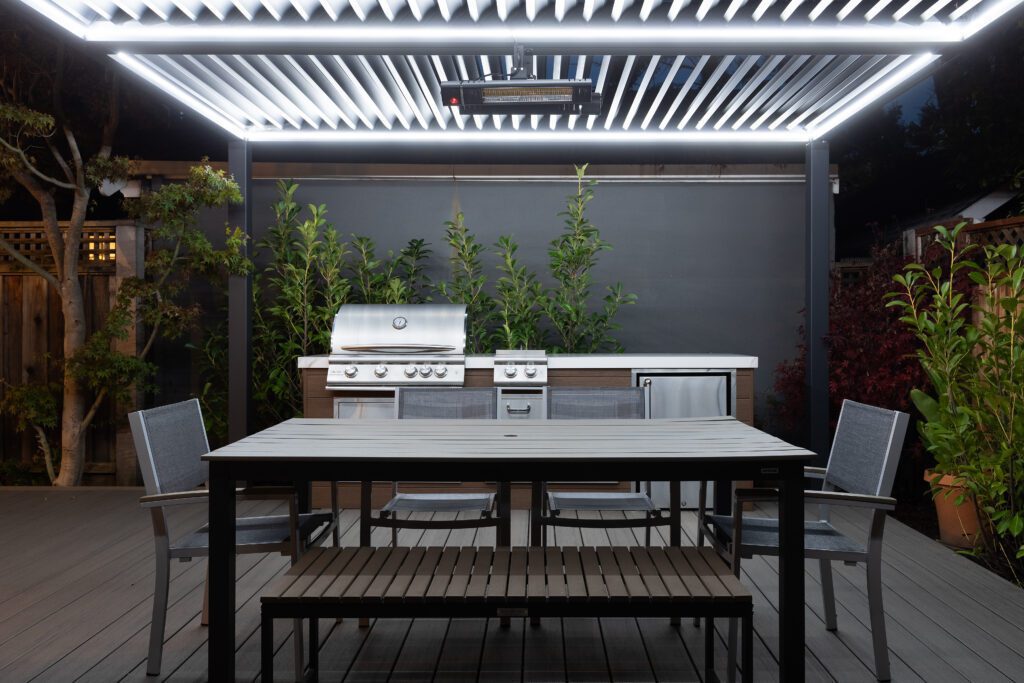
- Careful placement beneath pergolas or covered structures
Simply placing a grill on a deck is very different from installing a permanent outdoor kitchen. Every appliance manufacturer provides installation requirements that should be followed in addition to local building codes.

3. Utility Planning Should Happen Early
One of the biggest mistakes homeowners make is thinking about utilities after the deck has already been built.
Depending on your design, your outdoor kitchen may require:
- Natural gas lines
- Electrical circuits
- Water supply
- Drainage
- Outdoor-rated lighting
- Weather-protected outlets
Planning these systems during the deck design phase is typically much easier—and often more cost-effective—than retrofitting them later.
4. Material Selection Is Especially Important in the Bay Area
Bay Area weather is generally mild, but outdoor kitchens remain exposed to:
- UV rays
- Coastal moisture
- Rain
- Temperature fluctuations
- Grease and food spills
Choosing durable materials helps ensure your investment lasts for years.
Popular options include:
Stainless Steel Cabinets
Resistant to moisture and corrosion while offering a clean, modern appearance.
Stone or Porcelain Countertops
Durable and able to withstand outdoor conditions better than many indoor countertop materials.
Composite Decking
Many homeowners choose premium composite decking because it requires minimal maintenance and resists moisture, fading, and rot better than traditional wood.
5. Think Beyond the Grill
The best outdoor kitchens are designed around how your family actually entertains.
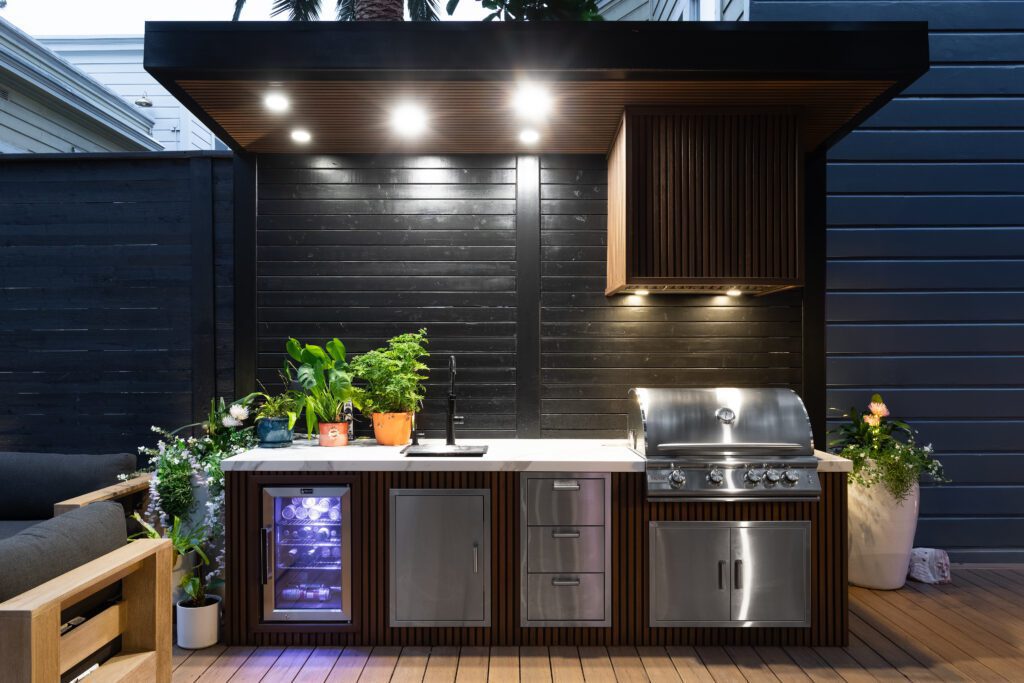
Consider features such as:
- Beverage refrigerators
- Ice makers
- Storage drawers
- Trash pull-outs
- Side burners
- Pizza ovens
- Seating areas
- Outdoor televisions
- Integrated lighting
Rather than trying to include every available appliance, prioritize the features you’ll use most often.
6. Bay Area Permits Should Never Be Overlooked
Many outdoor kitchen projects involve structural modifications, gas work, electrical installations, or plumbing.
Depending on your city, permits may be required for:
- Deck construction
- Structural reinforcement
- Gas line installation
- Electrical work
- Plumbing
- Built-in outdoor appliances
Building without the proper permits can create complications during inspections or when selling your home. Working with experienced professionals helps ensure your project complies with local requirements.
7. Plan for the Future
One of the smartest approaches is designing your deck with future upgrades in mind.
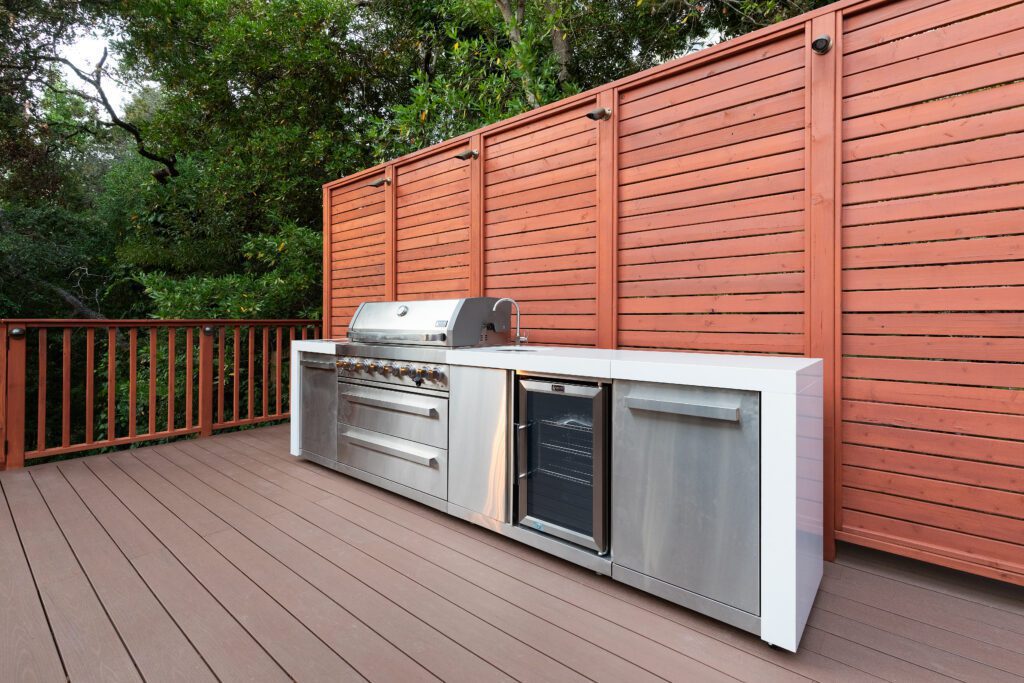
Even if your current budget only allows for a grill station, preparing the structure for future additions—such as a refrigerator, sink, or larger kitchen island—can save significant time and expense later.
A well-planned deck creates flexibility as your needs evolve.
Is an Outdoor Kitchen Worth It?
For many Bay Area homeowners, the answer is absolutely.
An outdoor kitchen transforms a deck from simply a place to sit into a true extension of the home. It creates additional living space, enhances entertaining, and allows families to enjoy California’s mild climate throughout much of the year.
The key is making sure the deck is designed to support it safely and efficiently.
Work with Deck Professionals from the Beginning
At Techwood Decks, we believe every successful outdoor living project starts with thoughtful planning.
If you’re considering adding an outdoor kitchen to a new deck—or upgrading an existing one—our team can help evaluate the structure, discuss design possibilities, and build a deck that’s ready for years of outdoor entertaining.
Thinking about building your dream outdoor kitchen? Contact Techwood Decks today to schedule a consultation and explore what’s possible for your outdoor space.
