
As California homeowners become increasingly focused on sustainability, many are asking the same question before starting a deck project: Which decking material is the most environmentally friendly?
At Techwood Decks, we regularly help homeowners compare decking options based not only on appearance and durability, but also on long-term environmental impact. Whether you’re building a new outdoor living space or replacing an aging wood deck, understanding the sustainability of modern decking materials can help you make a more informed decision.
Why Sustainability Matters for California Homeowners
California has long been a leader in environmental awareness. From water conservation to renewable energy, homeowners throughout the Bay Area are looking for ways to reduce waste and invest in products that last longer.
When it comes to decking, sustainability goes beyond recycled content. A truly eco-friendly deck should also:
- Require minimal maintenance
- Last for decades without replacement
- Resist rot, mold, and insects
- Reduce the need for harmful stains and chemicals
- Generate less waste over its lifespan
With those factors in mind, let’s compare the most common decking materials.
Traditional Wood Decking
Wood remains a popular choice because of its natural appearance, but it comes with environmental trade-offs.
Advantages
- Renewable natural resource
- Biodegradable at the end of its life
- Lower manufacturing footprint than many synthetic materials
Challenges
- Requires frequent staining and sealing
- More susceptible to rot, termites, and moisture damage
- Often needs replacement much sooner than modern alternatives
- Ongoing maintenance consumes water, chemicals, and materials
For homeowners planning to stay in their homes long-term, the need for continual maintenance and eventual replacement can significantly increase a wood deck’s environmental footprint.
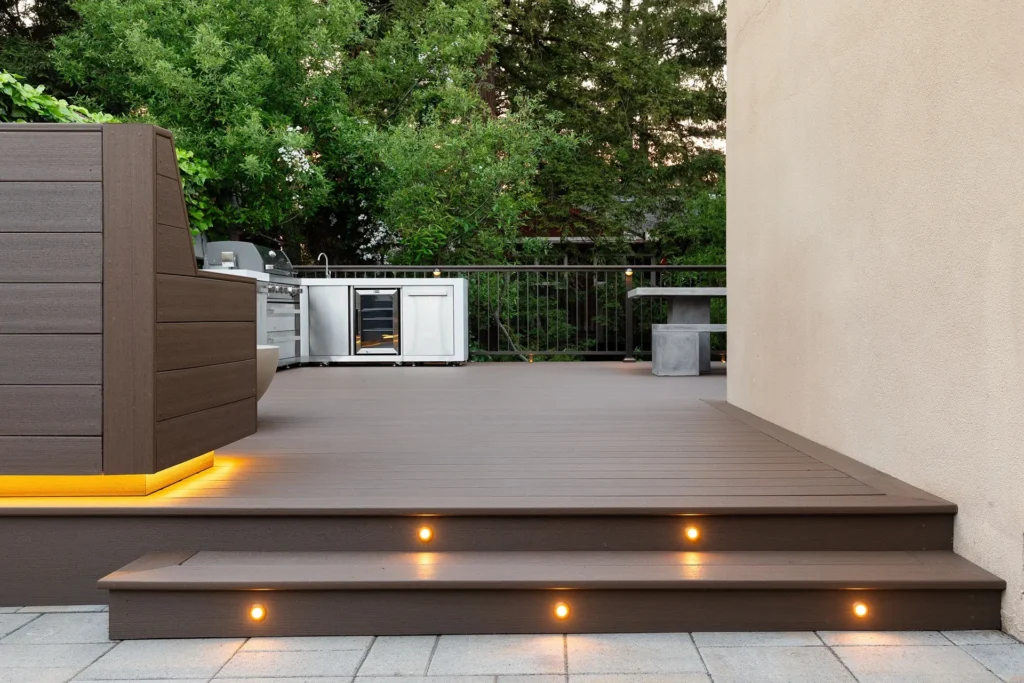
Composite Decking: A Strong Sustainability Contender
Composite decking has become one of the most popular choices in California, particularly among homeowners seeking low-maintenance outdoor living spaces.
Most premium composite decking products are manufactured using a combination of:
- Recycled wood fibers
- Recycled plastics
- Reclaimed industrial materials
Environmental Benefits
Diverts Waste from Landfills
Many composite decking manufacturers utilize recycled materials that would otherwise end up in landfills. This includes reclaimed wood products and recycled plastics.
Long Service Life
High-quality composite decking can last for decades with minimal degradation. Because it rarely needs replacement, fewer resources are consumed over time.
Reduced Chemical Use
Composite decking does not require annual staining, sealing, or painting, reducing the use of potentially harmful chemicals throughout the deck’s lifespan.
Low Water Consumption
Maintenance typically involves simple cleaning with soap and water, significantly reducing water usage compared to maintaining traditional wood decking.
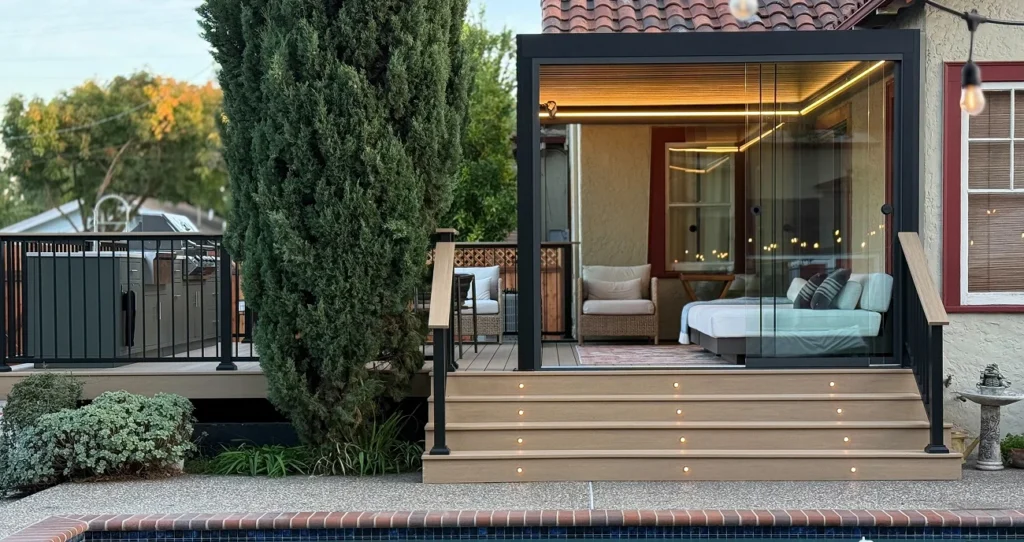
PVC Decking: Durability Meets Sustainability
PVC decking is another popular option for California homeowners, especially in coastal environments and high-moisture areas.
Unlike composite decking, PVC boards contain no organic wood fibers, making them exceptionally resistant to moisture, mold, and insects.
Sustainability Advantages
Exceptional Longevity
PVC decking often provides some of the longest lifespans available in the decking industry. The longer a product lasts, the fewer resources are needed for replacement.
Minimal Maintenance
Like composite decking, PVC requires no staining, sealing, or painting.
Excellent Performance in California Climates
From coastal fog to intense inland heat, PVC decking performs consistently across a wide range of California environments, helping homeowners avoid premature replacement.
Sustainability Considerations
PVC manufacturing is more energy-intensive than some alternatives, which can affect its initial environmental footprint. However, many homeowners find that its durability and longevity help offset that impact over the long term.
Looking Beyond Recycled Content
One of the biggest misconceptions about sustainability is focusing only on the percentage of recycled materials in a product.
A more complete approach considers the entire lifecycle of the deck:
Questions to Ask
- How long will the deck last?
- How often will maintenance be required?
- Will chemicals be needed for upkeep?
- How likely is replacement within the next 20 to 30 years?
- Can components be recycled at the end of their useful life?
In many cases, a deck that lasts 30 years with minimal maintenance may have a lower overall environmental impact than a deck requiring extensive maintenance and replacement during that same period.
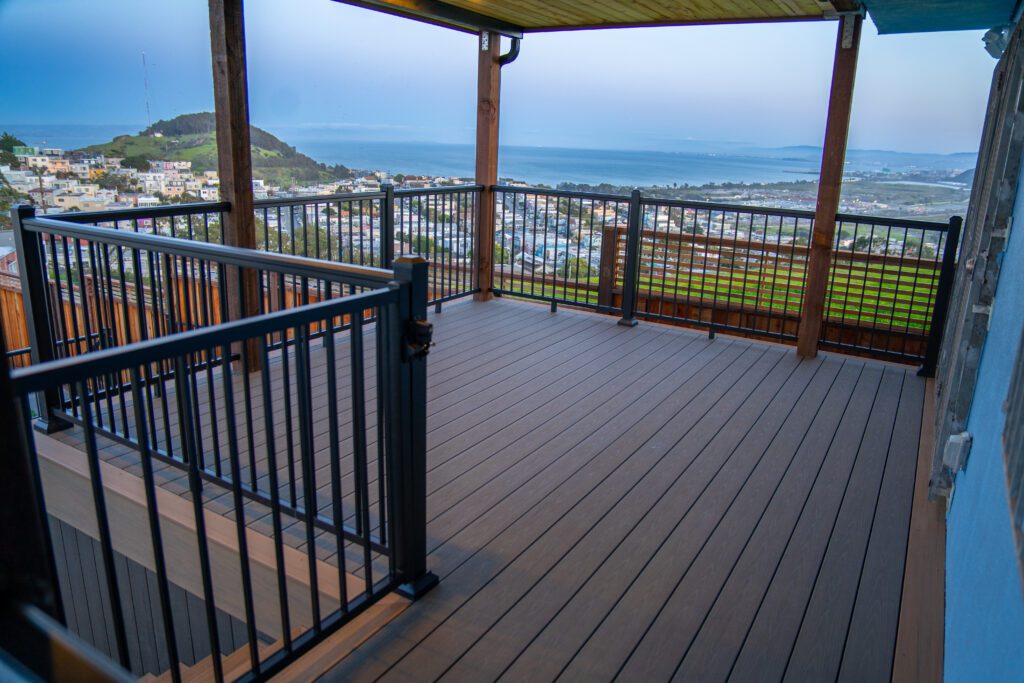
What Techwood Decks Recommends
At Techwood Decks, we work with homeowners throughout the Bay Area to design outdoor spaces that are both beautiful and built to last.
For clients prioritizing sustainability, we often recommend premium composite or PVC decking systems because they offer:
- Long service life
- Reduced maintenance requirements
- Excellent performance in California’s diverse climates
- Lower long-term material consumption
- Consistent appearance without frequent refinishing
The best solution ultimately depends on your home’s location, design goals, budget, and long-term plans for the property.
The Bottom Line
When evaluating sustainability, there is no single perfect decking material. However, for many California homeowners, premium composite and PVC decking provide significant environmental advantages through durability, reduced maintenance, and long-term performance.
If you’re planning a deck replacement or a new outdoor living project, the team at Techwood Decks can help you compare materials and choose the option that best aligns with your sustainability goals, lifestyle, and home.
