Two premium materials. Very different experiences beneath your feet. Here’s what nobody tells you before you choose.
You’ve done the research. You’ve looked at photos, compared warranties, and priced out both options. But there’s one thing product pages rarely capture: what does it actually feel like to walk across your deck every single day?
At Techwood Decks, we specialize in high-end decking installations using TimberTech products — and one of the most common questions we hear during consultations is about the sensory experience of each material. The sound when you step. The texture under bare feet. The way a board gives (or doesn’t) on a hot summer afternoon.
This guide covers exactly that. Whether you’re choosing between TimberTech PVC and TimberTech composite, understanding the underfoot experience is critical to making the right call for your home and lifestyle.
Why the “Feel” of Decking Actually Matters
Most homeowners focus on aesthetics and durability when selecting decking — and rightly so. But a deck is a place you live on. You walk across it barefoot in the morning with a coffee, host dinner parties, let the kids run loose, and relax on summer evenings. The tactile and acoustic qualities of your decking material shape that experience in ways that are hard to appreciate until you’re actually living with them.
The two key sensory factors are sound (what you hear when you walk) and feel (texture, firmness, and temperature response underfoot). PVC and composite materials behave quite differently on both fronts — and knowing the difference helps you choose the material that matches your lifestyle.
PVC Decking: The Sound & Feel Profile
What does PVC decking sound like?
PVC (polyvinyl chloride) decking is a fully synthetic material — there is no wood fiber in its composition. Because of this, it has a denser, more uniform cellular structure than composite boards. When you walk on TimberTech’s PVC line (such as the Azek collection), you’ll notice a quieter, more muted footfall.
The hollow-core construction common in some PVC profiles can produce a faint resonance if boards aren’t properly supported. Still, with correct joist spacing and professional installation, most homeowners describe the sound as nearly silent — closer to walking on a high-end interior floor than an outdoor deck surface.
There is very little of the familiar “clunk” sound that some composite or wood decks produce. If noise is a concern — say, you have bedrooms below your deck or neighbors in proximity — PVC tends to be the quieter choice.
How does PVC feel underfoot?
PVC decking has a smooth-to-lightly-textured surface with a slight elasticity. It doesn’t feel hard or cold in the way natural stone might. Barefoot, it’s comfortable — not abrasive — and most TimberTech PVC products include a multi-width embossed grain pattern that provides both visual warmth and tactile grip.
One well-known characteristic of PVC: it resists heat absorption significantly better than composite. On a 90°F afternoon, a PVC deck surface stays considerably cooler than composite boards of the same color. For families with kids or anyone who spends time barefoot on the deck, this is a genuine quality-of-life difference.
PVC also has a very slight “give” — not spongy, but less rigid than hardwood or dense composite. Some people find this surprisingly comfortable over long periods of standing, similar to a cushioned floor in a kitchen.
Composite Decking: The Sound & Feel Profile
What does composite decking sound like?
Composite decking is made from a blend of wood fiber and plastic polymers — and that wood content changes the acoustic profile meaningfully. TimberTech composite boards (like the Pro Reserve or Pro Legacy collections) tend to produce a sound underfoot that’s warmer and more organic than PVC. Many homeowners describe it as closer to real wood — a subtle, satisfying resonance rather than a synthetic hollow sound.
The denser core of capped composite boards means footfall noise is generally low, but the natural acoustic character of wood fiber comes through in a way that feels more familiar to those accustomed to traditional decking. If you’ve lived with a wood deck and loved its sound, composite will feel more like home.
How does composite feel underfoot?
Composite decking is firmer underfoot than PVC. The wood fiber content gives it a density and rigidity that closely resembles hardwood decking, which many homeowners prefer. There’s less flex, more solidity, and the surface textures tend to be slightly more pronounced, which improves slip resistance in wet conditions.
The trade-off is heat retention. Composite boards absorb more heat from the sun than PVC, particularly darker color options. On hot days, walking barefoot across a dark composite deck can be uncomfortable. TimberTech addresses this with their PermaTech cap technology, which reduces surface temperatures compared to older composite products — but it remains a consideration, especially in southern climates like ours here in the Southeast.
For those who prioritize the feeling of a natural, grounded surface — something that feels like real wood without the maintenance — TimberTech composite delivers an experience that PVC simply doesn’t replicate.
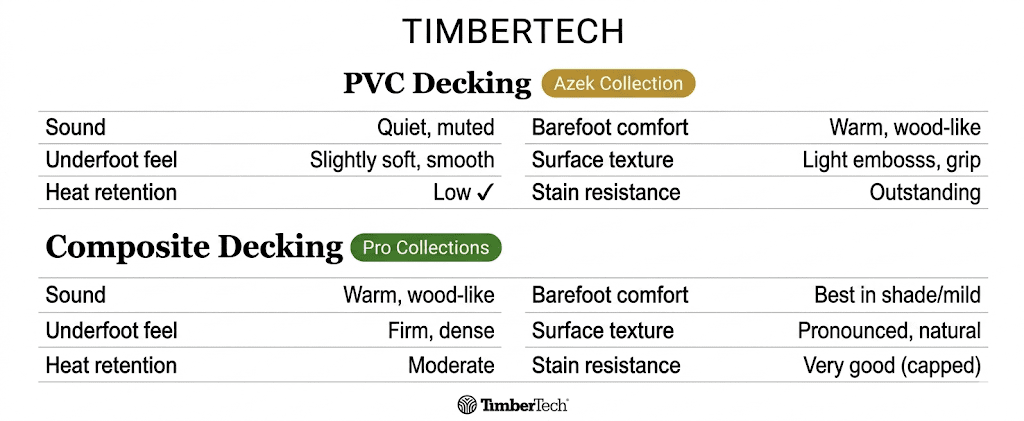
Side-by-Side: PVC vs Composite at a Glance
Which One Is Right for Your Deck?
The honest answer is: it depends on how you use your outdoor space and what sensory experience matters most to you.
Choose TimberTech PVC if your deck gets direct sun exposure for most of the day, if barefoot use is a priority, if you have young children, or if you want the absolute quietest, most low-maintenance surface possible. PVC’s heat resistance and surface comfort make it the practical winner for sun-drenched spaces in warm climates.
Choose TimberTech composite if you love the sound and feel of natural wood, if your deck is mostly shaded, if you prioritize that grounded, solid underfoot sensation, or if you want the most realistic wood aesthetic available in a low-maintenance product. The texture and density of the composite will feel more familiar — and more satisfying — for many homeowners.
At Techwood Decks, we always recommend visiting a job site or showroom to walk on both materials before committing. Photos and specifications only tell part of the story. The other part lives in your feet.
Frequently Asked Questions
Does PVC decking feel fake or plasticky underfoot?
Modern TimberTech PVC boards have come a long way from earlier generations of synthetic decking. The embossed grain patterns and multi-tonal color technology give them a realistic texture that feels premium, not cheap. Most homeowners are surprised by how natural the surface feels once they walk on it.
Is composite decking slippery when wet?
Capped composite boards like those in the TimberTech Pro line include textured surfaces that provide solid grip even when wet. They outperform many wood species in wet-slip resistance when properly installed and maintained.
How hot does composite decking actually get in the sun?
In direct sun on a 90°F day, dark composite boards can reach surface temperatures between 130–150°F — uncomfortable for bare feet. Lighter colors retain significantly less heat. TimberTech’s PermaTech capping technology helps reduce heat absorption compared to older uncapped composites, but PVC boards remain cooler overall.
Can I sample TimberTech materials before my project starts?
Absolutely — and we encourage it. Techwood Decks can arrange for you to see and walk on both PVC and composite TimberTech products before making your decision. Contact us to schedule a consultation.
Does installation affect the sound of the deck?
Yes, significantly. Proper joist spacing, subframe construction, and fastener type all affect how boards perform acoustically. This is one of many reasons professional installation matters — a poorly supported deck will produce sound issues regardless of the material.
The Bottom Line
PVC and composite are both exceptional decking materials — but they offer genuinely different sensory experiences. PVC runs cooler and quieter; composite feels firmer and more like natural wood. Neither is universally “better.” The right choice is the one that matches how you live in your outdoor space.
As an authorized TimberTech dealer and installer, Techwood Decks can guide you through both options and help you make a decision you’ll be happy with for decades. Reach out to our team for a free consultation — we’ll walk you through every material detail, and if you’re lucky, walk across both options with you.
Ready to feel the difference for yourself?
Schedule a free consultation with our TimberTech specialists at Techwood Decks.