
California living is all about outdoor space, but with that sunshine comes a major challenge for homeowners: UV exposure and color fading. If you’re planning a new deck or upgrading an existing one, choosing UV-resistant decking California options can make the difference between a deck that looks stunning for years and one that quickly loses its appeal.
Why UV Exposure Matters for Decking
California’s climate, especially in coastal and inland regions, means intense, year-round sun exposure. Over time, ultraviolet (UV) rays break down the surface of many decking materials, leading to:
- Fading and discoloration
- Uneven color patches
- Surface deterioration
- Increased maintenance needs
This is particularly noticeable in darker-colored decks, which tend to absorb more heat and show fading faster.
How Different Decking Materials Handle Sun Exposure
Not all decking materials perform the same under UV exposure. Here’s how the most common options compare:
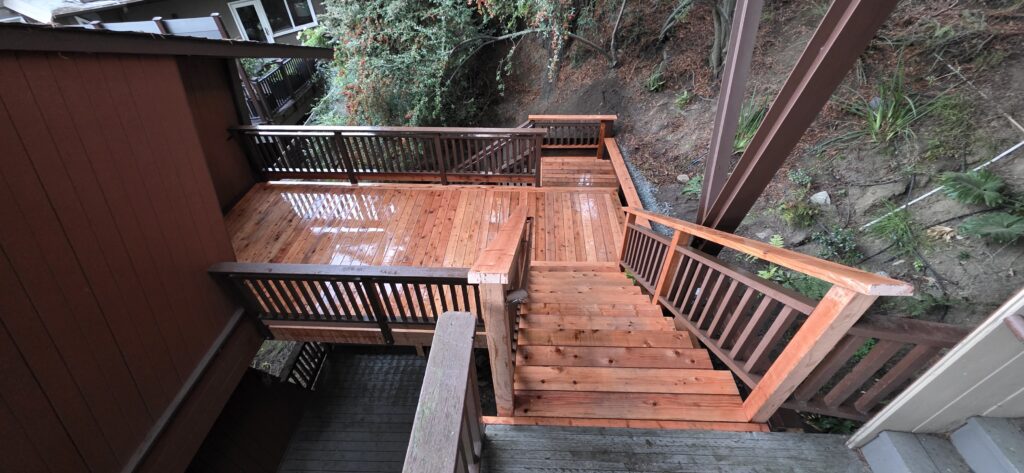
1. Traditional Wood Decking
Natural wood offers a classic look, but it’s the most vulnerable to sun damage.
- Pros: Beautiful, natural grain
- Cons: Fades quickly, requires frequent staining and sealing
- Best for: Homeowners willing to commit to ongoing maintenance
Over time, wood tends to turn gray unless consistently treated with UV-protective finishes.
2. Composite Decking (High-Performance Option)
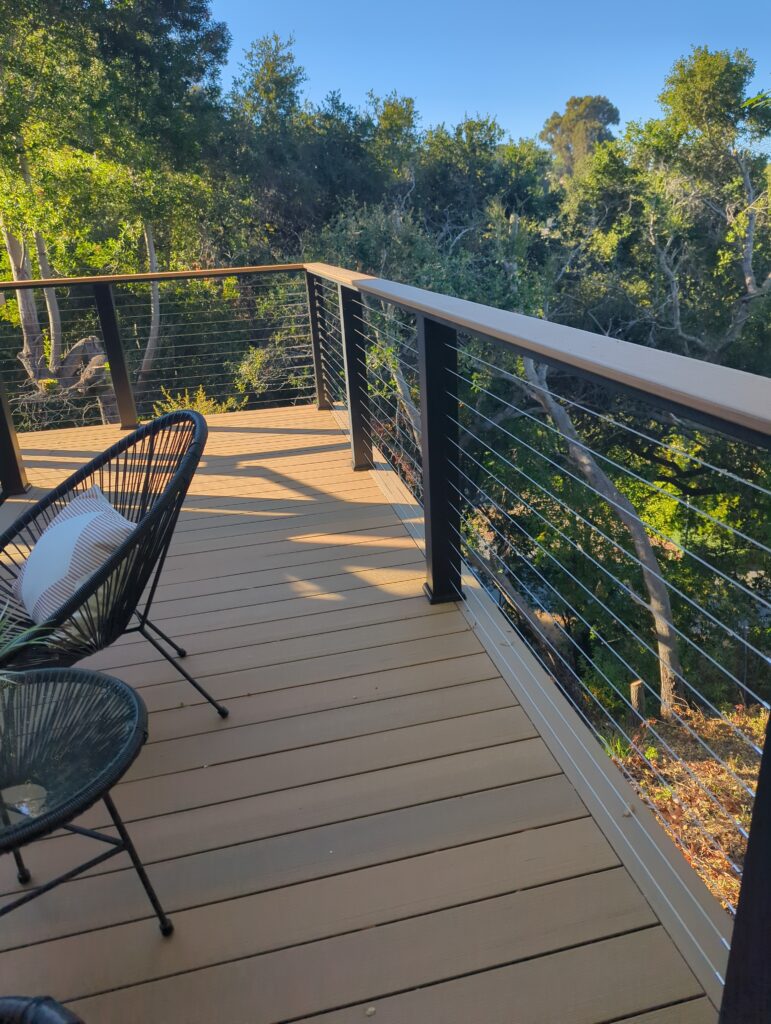
Modern composite decking, especially capped composites, offers superior UV resistance.
- Pros: Engineered to resist fading and staining
- Cons: Higher upfront cost
- Best for: Long-term performance with minimal maintenance
Brands like TimberTech use advanced polymer caps that protect the core material from UV rays, helping maintain color consistency over time.
3. PVC Decking
PVC (polyvinyl chloride) decking is one of the most UV-resistant options available.
- Pros: Excellent fade resistance, lightweight, moisture-resistant
- Cons: Premium price point, can feel less natural underfoot
- Best for: High-sun, high-moisture environments
What to Look for in UV-Resistant Deck Boards
When selecting decking for a sunny California property, focus on these key features:
Capped Surface Technology
Look for boards with a protective outer layer that shields against UV rays, moisture, and stains.
Fade & Stain Warranties
High-quality manufacturers like TimberTech often offer 25–50 year fade warranties, which is a strong indicator of performance.
Color Selection
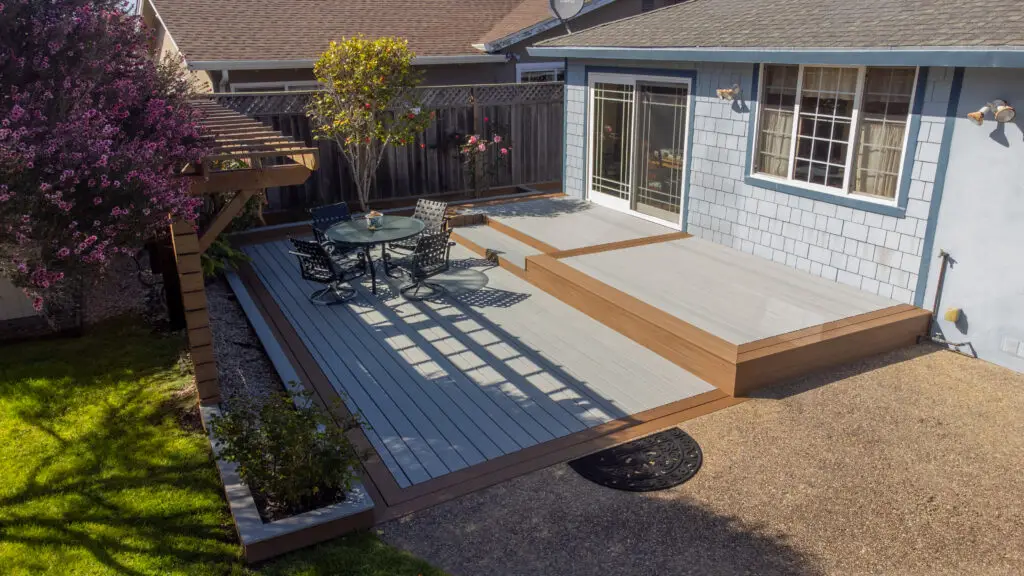
- Lighter tones: Reflect more sunlight, stay cooler, fade less visibly
- Darker tones: More dramatic look, but may show fading sooner
Heat Resistance
Some newer boards are designed to stay cooler under direct sunlight, improving comfort during hot California summers.
Design Tip: Plan for Sun Patterns
A smart deck design considers how sunlight moves across your space throughout the day.
- Use partial shade structures like pergolas or overhangs
- Incorporate mixed materials (decking + pavers)
- Position seating areas in naturally shaded zones
This not only protects your deck but also enhances usability.
Long-Term Value: Why Material Choice Matters
While wood may seem cost-effective upfront, the long-term maintenance and refinishing costs can add up quickly. Composite and PVC decking, on the other hand, offer:
- Consistent color retention
- Minimal upkeep
- Higher resale value
- Better overall durability
For many California homeowners, investing in UV-resistant materials pays off within just a few years.
Final Thoughts
In a sun-heavy climate like California, your deck needs to do more than just look good on day one; it needs to stand up to years of UV exposure without losing its color or integrity.
Choosing high-performance materials, understanding sun exposure, and planning your design carefully will ensure your outdoor space remains beautiful, functional, and low-maintenance for years to come.
