
Fire-resistant decking materials are no longer optional, they are essential for modern homeowners. In fact, with rising wildfire risks and stricter building codes, selecting decking that can resist flames is a smart investment. Moreover, these materials not only enhance safety but also offer durability and low maintenance.
If you’re planning a new deck or upgrading an existing one, understanding your options is crucial. Therefore, this article explores why fire-resistant decking matters and which materials perform best.
1. Why Fire Resistance Matters
Wildfires and accidental outdoor fires are increasing concerns. Consequently, selecting decking with fire-resistant properties is more than a precaution, it’s a necessity.
Benefits of fire-resistant decking include:
- Reduced risk of deck ignition during wildfires
- Compliance with local building codes and regulations
- Increased peace of mind for families and neighbors
In addition, fire-resistant decks tend to resist other hazards, such as high heat and prolonged sun exposure. For example, composite and PVC boards can withstand extreme temperatures without warping.
2. Top Fire-Resistant Decking Materials
When it comes to safety, not all decking materials are equal. Fortunately, several options combine fire resistance with durability and aesthetic appeal.
Composite Decking
- Made from wood fibers and recycled plastics.
- Many brands meet Class A fire ratings, the highest standard.
- Low maintenance and resistant to cracking and splintering.
Moreover, composite decking is available in multiple colors and textures, so homeowners do not sacrifice style.
PVC Decking
- 100% plastic material, naturally resistant to flames.
- Non-combustible and highly durable.
- Smooth, uniform appearance for modern decks.
In addition, PVC is lightweight, which can simplify installation.
Aluminum Decking
- 100% metal, inherently fireproof.
- Long-lasting, lightweight, and maintenance-free.
- Can be powder-coated for color and texture.
Consequently, aluminum decking is ideal for areas with high wildfire risk.
Thermally Treated or Fire-Retardant Wood
- Wood treated with fire-retardant chemicals.
- Maintains a more natural wood appearance.
- Must be inspected regularly for wear and effectiveness.
However, it requires more attention over time than composites or PVC.
3. Safety Ratings & Codes
Building codes often require specific fire-resistance levels, especially in high-risk wildfire zones. As a result, it’s important to check local regulations before purchasing decking.
- Class A: Highest fire resistance, self-extinguishing
- Class B: Moderate resistance
- Class C: Lower resistance, may require additional safety measures
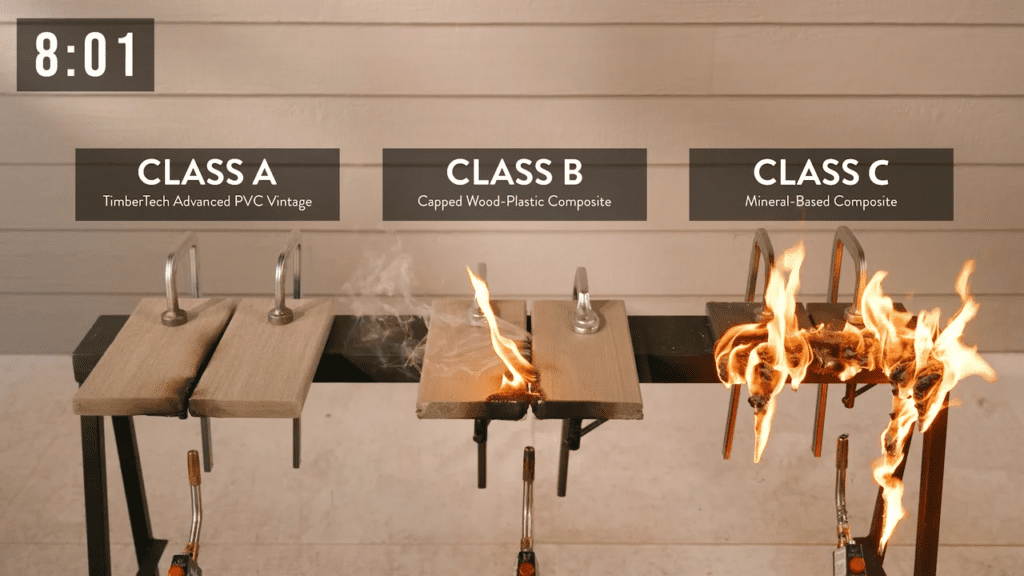
Additionally, using fire-resistant decking can sometimes lower insurance costs in wildfire-prone areas. For example, some homeowners see a reduction in premiums when Class A materials are installed.
4. Design & Comfort Considerations
Fire-resistant materials don’t have to compromise on style. In fact, modern composites, PVC, and aluminum come in a wide variety of colors, textures, and finishes.
- Composites mimic natural wood without the risk of combustion.
- Aluminum can be powder-coated for sleek contemporary looks.
- PVC offers low-maintenance solutions that stay cool underfoot.
Therefore, homeowners can enjoy both safety and aesthetic appeal. Moreover, combining these materials with stylish outdoor furniture and lighting enhances the overall experience.
Fire-resistant decking materials are a critical investment for safety, durability, and peace of mind. Whether you choose composite, PVC, aluminum, or fire-treated wood, understanding the options and local regulations ensures a secure and stylish deck.
Consequently, when planning your next deck, prioritize fire safety alongside design and comfort. In addition, using these materials protects your home and loved ones, while still allowing for a beautiful outdoor living space.
