
Building a deck on a sloped or hillside lot can transform an otherwise difficult landscape into a beautiful outdoor living space. Elevated views, multi-level designs, and dramatic architecture are all possible, but construction on uneven terrain comes with unique challenges.
One of the most important decisions homeowners and builders face is choosing the right decking material. Two of the most popular modern options, PVC and composite decking, each perform differently when installed on hillside or sloped properties. Understanding those differences can help ensure your deck is both structurally sound and visually stunning.
Why Hillside Deck Projects Are More Complex
Unlike flat yards, hillside lots require additional planning and engineering before installation begins. Builders must consider several factors, including:
- Structural stability
Posts often need deeper footings or specialized anchoring systems. - Height variations
Elevated decks may require taller support systems and reinforced framing. - Access for construction
Steep terrain can limit machinery access and require more manual installation.
Because the structure itself is more complex, the decking material you choose becomes even more important.
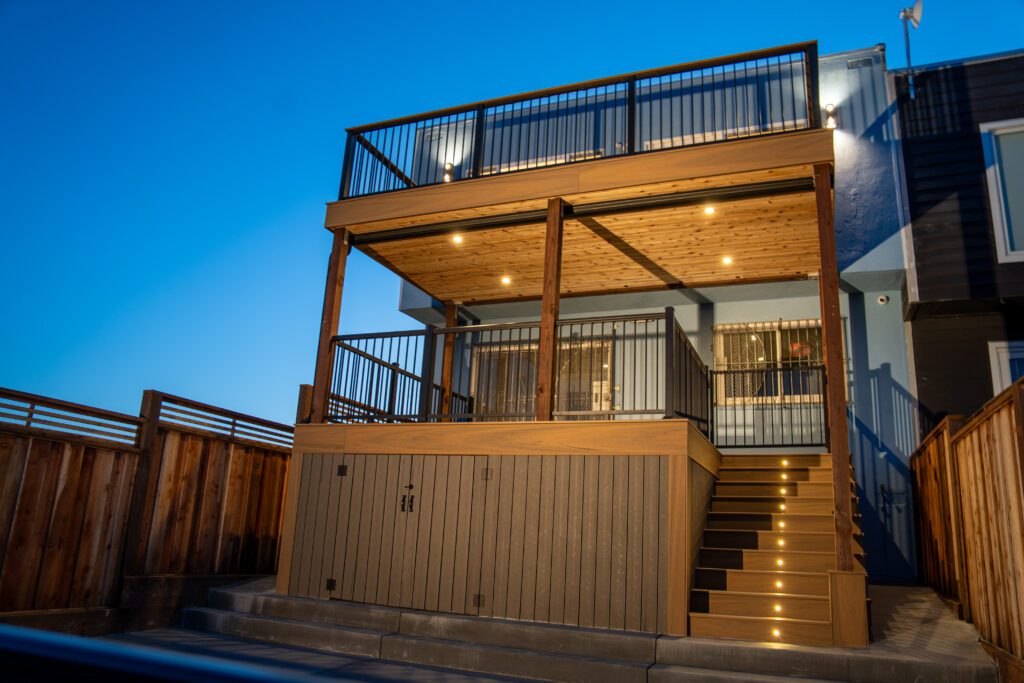
Composite Decking on Hillside Lots
Composite decking, typically made from a blend of recycled wood fibers and plastic, offers a natural wood-like appearance with improved durability compared to traditional lumber.
Advantages for Sloped Installations
Strong structural feel
Composite boards are typically dense and rigid, which can give the deck surface a solid, stable feel, especially on elevated structures.
Aesthetic versatility
Many composite products mimic natural wood grain and color, blending beautifully into hillside landscapes and wooded environments.
Scratch resistance
Because hillside decks often see heavier use, such as furniture movement or foot traffic, many composite boards provide excellent scratch resistance.
Challenges
Weight
Composite boards are significantly heavier than PVC. On hillside projects with tall framing systems, that extra weight adds load to the structure and can require stronger framing.
Moisture sensitivity
Although far more resistant than wood, composite decking still contains organic material. In environments with poor drainage or constant moisture exposure, boards may retain water over time.
Thermal expansion
Composite expands and contracts with temperature changes, requiring careful spacing during installation.
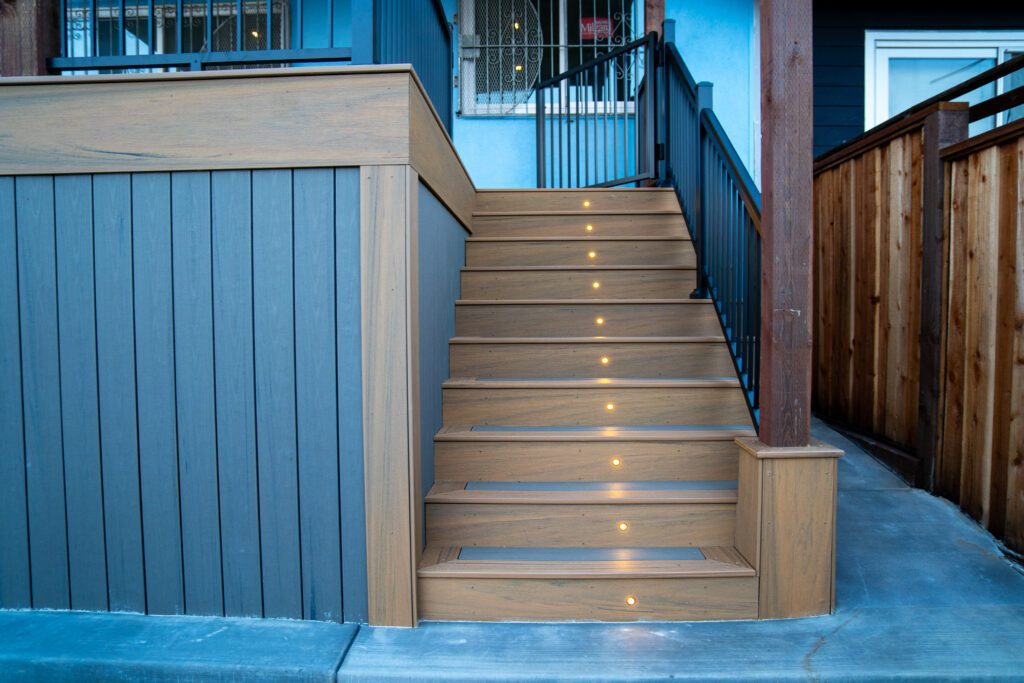
PVC Decking on Hillside Lots
PVC decking is made from 100% synthetic materials, meaning it contains no wood fibers. This creates a different performance profile that can be especially useful in certain hillside conditions.
Advantages for Sloped Installations
Lightweight material
PVC boards are lighter than composite, reducing overall structural load. This can be beneficial for large elevated decks or multi-level hillside builds.
Excellent moisture resistance
Since PVC contains no organic material, it is highly resistant to water absorption. This is particularly useful on slopes where drainage may direct water toward the deck structure.
Low maintenance
PVC resists mold, mildew, and staining, making it a strong option for shaded hillside areas where moisture tends to linger.
Challenges
Flexibility
PVC boards can be slightly more flexible than composite. This means installers must follow precise joist spacing requirements to avoid any bounce.
Temperature sensitivity
PVC can expand more noticeably in high heat, requiring proper gapping and installation techniques.
Surface feel
Some homeowners find PVC boards feel slightly different underfoot compared to the denser feel of composite.
Structural Considerations for Hillside Decks
Regardless of material, hillside deck installations require careful structural planning.
Important elements include:
- Deep concrete footings
- Steel or reinforced post supports
- Lateral bracing for tall structures
- Multi-level deck designs to follow the slope
- Professional engineering for larger builds
The decking boards themselves are only one part of the system, but choosing the right material can simplify installation and improve long-term durability.
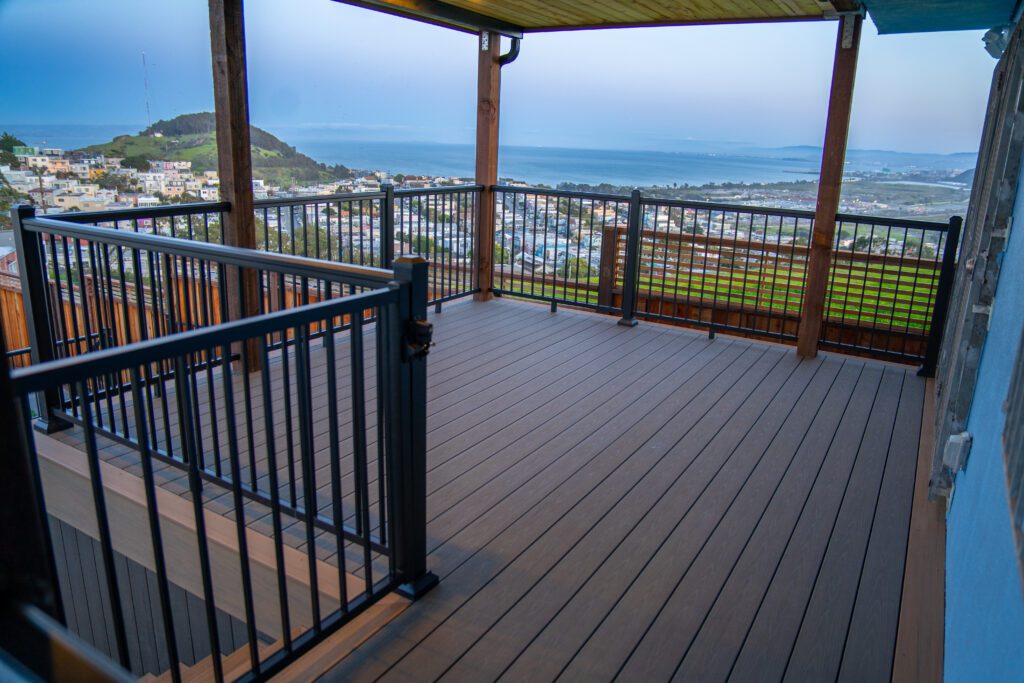
Which Material Is Better for Hillside Decks?
There’s no single answer; both PVC and composite can perform well when properly installed. The best choice depends on the priorities of the project.
PVC may be ideal if:
- The deck will be very large or elevated
- Moisture exposure or heat is a concern
- Low maintenance is a top priority
Composite may be ideal if:
- A natural wood appearance is important
- The deck will see heavy daily use
- You prefer a denser, more solid feel underfoot
Sloped and hillside properties present exciting design opportunities, but they also demand smart material choices. Both PVC and composite decking offer excellent durability compared to traditional wood, yet their differences in weight, flexibility, and moisture resistance can affect installation and performance.
Working with experienced deck designers and builders ensures your hillside deck is engineered correctly from the ground up. With the right planning and material selection, even the steepest backyard can become a breathtaking outdoor living space.
