
Including Fire Zones, Wildland–Urban Interface (WUI) & HOA Rules
Building or replacing a deck in California is not just a design decision, it’s also a code, permit, and safety process. Local Code & Permit Considerations for Decking Materials should always be kept in mind, as California has some of the strictest building regulations in the country, and homeowners must carefully consider local building codes, fire-zone requirements, and HOA rules before selecting decking materials.
In this guide, we’ll break down California deck permit requirements, explain how fire zones and WUI regulations affect decking materials, and clarify what homeowners should know about HOA approvals. Whether you’re planning a new deck or replacing an existing one, this article will help you avoid delays, costly revisions, and compliance issues.
Why California Deck Codes Are More Complex Than Other States
California’s building regulations are designed to address earthquakes, wildfires, coastal exposure, and dense residential development. As a result, deck projects are governed by multiple overlapping rules, including:
- California Building Code (CBC)
- Local city or county amendments
- Fire code and WUI regulations
- HOA architectural guidelines (if applicable)
Because of this layered system, the decking material you choose can directly impact permit approval timelines and project costs.
Do You Need a Permit to Build or Replace a Deck in California?
In most California cities, yes, a permit is required for deck construction or replacement.
Generally, a permit is required if:
- The deck is attached to the home
- The deck is over 30 inches above grade
- Structural framing is modified or replaced
- Stairs, railings, or guardrails are added or altered
Even when replacing an existing deck, cities often require a permit if you are:
- Changing materials
- Modifying the framing
- Updating the deck to meet current code standards
Important: “Like-for-like replacement” is often misunderstood. Many jurisdictions still require permits because older decks rarely meet today’s safety and fire-resistance standards.
California Fire Zones & WUI Requirements: What Homeowners Must Know
One of the most critical considerations in California deck projects is fire safety, especially for homes located in:
- Very High Fire Hazard Severity Zones
- Wildland–Urban Interface areas
How Fire Zones Affect Decking Materials
If your home is in a designated fire zone, local building departments may require:
- Ignition-resistant materials
- Non-combustible materials
- Fire-rated assemblies
This is where material selection becomes especially important.
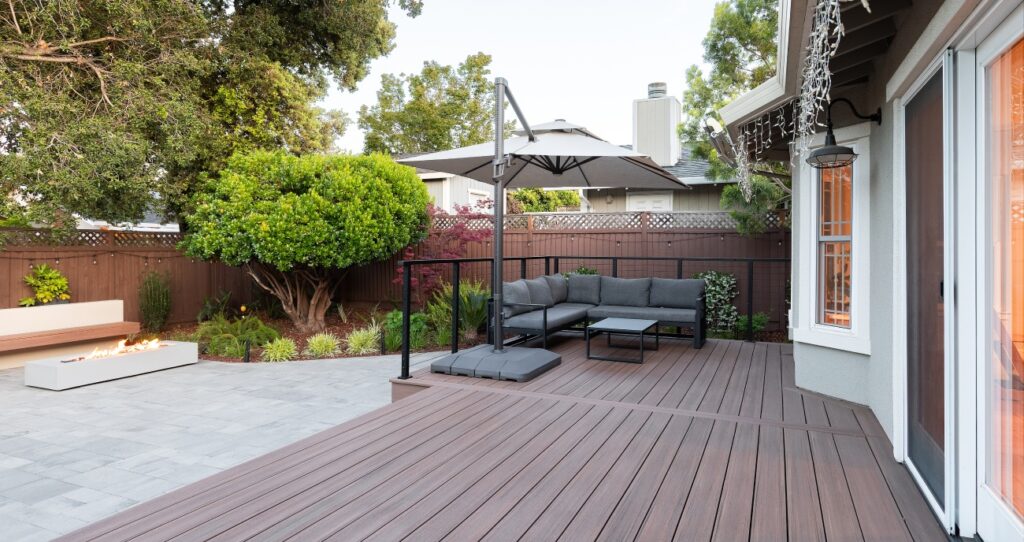
Approved Decking Materials in California Fire Zones
- ASTM E84 (surface burning characteristics)
- ASTM E1354 (heat release rate)
1. PVC Decking
PVC decking is often a strong option because:
- It does not contain wood fibers
- Many products offer Class A flame spread ratings
- It resists embers better than traditional wood
However, approval still depends on local fire authority review.
2. Aluminum Decking
In high-risk fire zones, aluminum decking is frequently one of the safest and most easily approved materials because it is:
- Non-combustible
- Highly durable
- Resistant to heat, embers, and flame spread
For homeowners prioritizing maximum fire resistance, aluminum decking is often the best long-term solution.
Deck Framing Considerations: Wood vs. Metal
While homeowners often focus on deck boards, framing materials are just as important in California permits.
Pressure-Treated Wood Framing
- Commonly used
- Must meet fire-retardant treatment requirements in some zones
- Subject to stricter inspection standards in WUI areas
Steel or Aluminum Framing
- Increasingly popular in California
- Offers superior fire resistance
- Often preferred in high-fire-risk locations
- Can simplify permit approval in certain jurisdictions
Although metal framing may have a higher upfront cost, it often reduces fire-compliance complications during permitting.
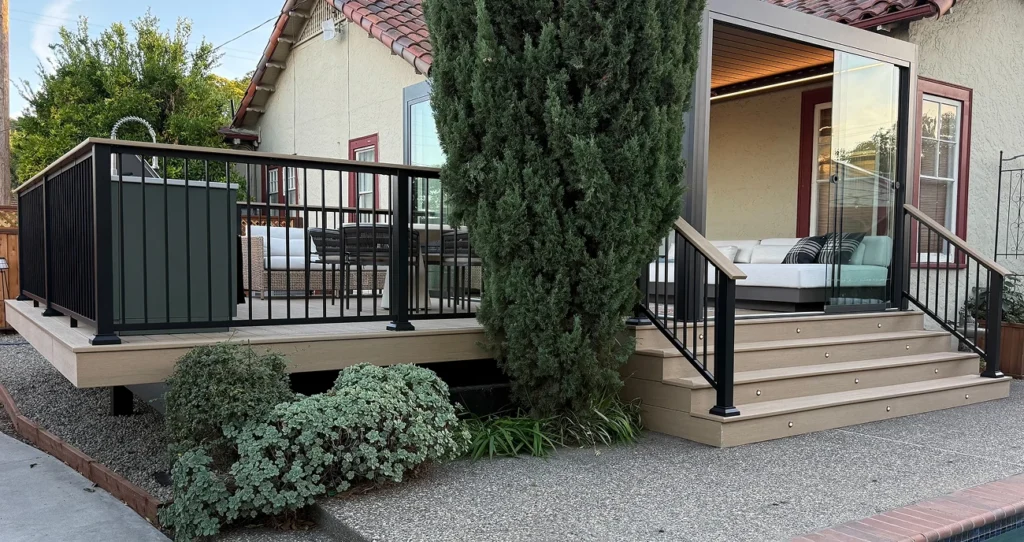
HOA Rules: An Often Overlooked Step
If your home is part of a Homeowners Association (HOA), HOA approval is usually required before submitting plans to the city.
Common HOA Deck Restrictions Include:
- Approved material lists
- Color and finish limitations
- Railing style requirements
- Visibility from neighboring properties
Even if a material is city-approved, the HOA may still reject it.
Tip: Always secure HOA approval first. Many cities will ask for written HOA authorization as part of the permit application.
Coastal & Environmental Considerations in California
For homes near the coast or in environmentally sensitive areas, additional rules may apply, including:
- Coastal Commission guidelines
- Corrosion-resistant fasteners and framing
- Height and setback restrictions
In these regions, PVC or aluminum decking often performs better long-term due to moisture and salt exposure.
How Local Jurisdictions Can Differ Across California
Deck regulations can vary significantly between cities such as:
- San Francisco
- San Jose
- Oakland
- Los Angeles
- San Diego
Each municipality may enforce:
- Different railing heights
- Stair geometry requirements
- Fire-rating documentation standards
That’s why working with a contractor familiar with local permitting offices is critical.
How Techwood Decks Helps Navigate California Deck Permits
At Techwood Decks, we take a permit-first approach to deck design and material selection. Our team:
- Verifies local building and fire code requirements
- Confirms WUI and fire-zone compliance
- Selects materials that meet both safety and aesthetic goals
As a result, our clients avoid delays, redesigns, and failed inspections.
Build Smart, Safe & Code-Compliant
In California, decking projects require more than good design, they demand regulatory awareness and material expertise. From fire-zone requirements to HOA rules, understanding local codes early can save time, money, and stress.
Before choosing your decking materials, make sure they align with:
- Local building codes
- Fire safety regulations
- HOA guidelines
- Long-term durability needs
When in doubt, consult professionals who specialize in California-compliant deck construction.
Thinking About Building or Replacing a Deck in California?
Contact Techwood Decks to schedule a consultation and ensure your project is designed, permitted, and built the right way from day one.
